
Electrical fires are among the most dangerous categories of fire events for a critically important reason: using the wrong extinguisher on an electrical fire doesn’t just fail to suppress the fire. It can electrocute the person trying to put it out. Water is highly conductive. A stream of water hitting an energized electrical source creates a conductive path between the current and the person holding the extinguisher. The result can be a fatal electric shock even when the person believes they’re doing the right thing by fighting the fire. Understanding which fire extinguishers are safe and effective for electrical fires is not optional knowledge. It’s essential safety information for anyone responsible for fire safety in a commercial or residential setting.
This guide covers the fire extinguisher types that are safe for electrical fires, how they work, how to select the right one for your facility, and the Florida compliance requirements that govern fire extinguisher selection in commercial buildings across Tampa Bay and statewide.
The Class C Designation: What It Means and Why It Matters
In the United States, fire extinguishers are rated for specific fire classes. The Class C rating is the designation that indicates an extinguisher is safe for use on fires involving energized electrical equipment. Critically, Class C is not a description of a unique fire. It’s a safety designation about the extinguishing agent’s electrical properties. The “C” means the agent is electrically non-conductive and can be safely applied to energized electrical equipment without creating a conductive path between the current and the person using the extinguisher.
Furthermore, Class C does not mean the extinguisher suppresses fires differently in electrical contexts. It means you can use it safely without electrocution risk. The fires involving electrical equipment are typically Class A (burning insulation, plastic housing, surrounding combustibles) or Class B (burning electrical fluids) fires that happen to occur in an electrically energized environment. The C rating confirms that the agent used will not conduct electricity, making it safe to apply in that environment.
Two agent types carry Class C ratings and are appropriate for electrical fires: CO₂ and dry chemical (particularly ABC dry chemical). Other common extinguisher types. Water, wet chemical (Class K), and foam. Are specifically NOT rated for Class C and should never be used near energized electrical equipment. This is not a minor caution. It’s a life-safety requirement.
CO₂ Extinguishers for Electrical Fires: The Premium Choice
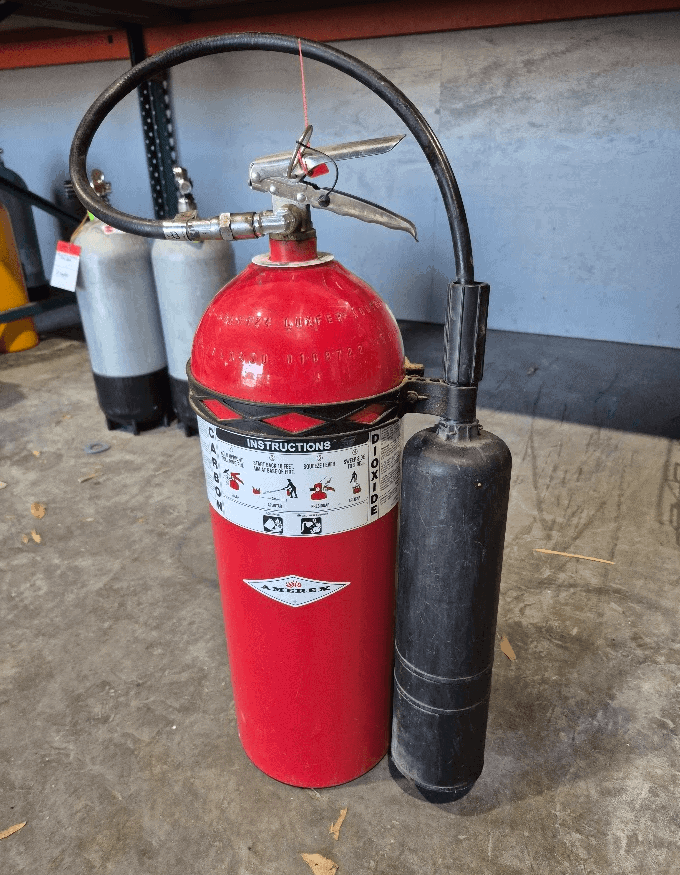
Moreover, CO₂ fire extinguishers are often the preferred choice for electrical fire hazards in commercial environments, for reasons that go beyond just the Class C rating. Carbon dioxide is an excellent electrical fire suppression agent for several reasons:
Zero Residue: CO₂ is a gas that dissipates completely after discharge, leaving no residue on electrical equipment, server components, sensitive instrumentation, or any other equipment. For data centers, server rooms, electrical switch rooms, and facilities with expensive electronic equipment, this is a significant advantage. Dry chemical powder, while also Class C rated, leaves a corrosive residue that can damage electronic equipment beyond what the fire itself caused. Defeating the purpose of suppression.
Fire Extinguisher Classifications
Non-Conductive by Nature: CO₂ is a completely non-conductive gas. Unlike water or foam. This are ionic and highly conductive, or even dry chemical powder (which can carry a slight moisture charge in some conditions), CO₂ presents no conductivity risk whatsoever. The physics are categorical: CO₂ cannot conduct electricity.
Effective at Class B and C Fires: CO₂ suppresses fires by displacing oxygen in the combustion zone. When oxygen concentration drops below approximately 15%, combustion cannot be sustained. For Class B fires (flammable liquid fires) and Class C fires, this mechanism is highly effective. CO₂ is rated for both B and C fire classes.
Worth noting, The primary limitation of CO₂ is that it is NOT effective for Class A fires. CO₂ displaces oxygen but provides no cooling. A smoldering paper fire that has oxygen removed will relight when CO₂ dissipates and oxygen returns. Server rooms and electrical equipment rooms where CO₂ extinguishers are the primary suppression tool must supplement with ABC extinguishers for any Class A materials in the area (paper documents, plastic housing materials that could smolder after a fire is apparently suppressed). Compare CO₂ vs. ABC in detail.
ABC Dry Chemical Extinguishers for Electrical Fires
In addition, ABC dry chemical extinguishers. The most common type in commercial settings. Also carry the Class C rating and are safe for use on electrical fires. Monoammonium phosphate powder, the agent in ABC extinguishers, is electrically non-conductive and can be safely applied to energized equipment. ABC extinguishers are the standard first-line tool for most commercial environments because they address Class A, B. C fires with a single unit.
However, the dry chemical residue is the significant downside for electrical fire applications. When dry chemical powder is discharged in a server room, control room, or on a piece of sensitive electronic equipment, the corrosive phosphate powder infiltrates every surface, connector, fan, and component. Even after thorough cleanup, corrosive residue trapped in connectors and circuit board components can cause ongoing failures over months. For environments where electronic equipment or sensitive instrumentation is the primary asset, the residue argument often tips the decision toward CO₂ or clean agent extinguishers.
For general commercial spaces where electrical equipment is present but is not the primary high-value asset. Offices, retail stores, restaurants. ABC extinguishers are entirely appropriate for electrical fire hazards. The residue on a light fixture or electrical panel is far less damaging than residue in a server room. Most businesses throughout St. Petersburg, Tampa, Clearwater, and throughout Tampa Bay do not have the specific sensitive equipment considerations that would drive a choice of CO₂ over ABC.
Clean Agent Extinguishers: The Best of Both Worlds for High-Value Electronics
What’s more, For environments where neither CO₂’s Class A limitation nor dry chemical’s residue is acceptable, clean agent extinguishers provide the optimal solution. Clean agents. Halon 1211, Halotron I. Cleanguard (FK-5-1-12). Are non-conductive gases that suppress fires through a combination of oxygen displacement and chemical chain interruption, leave no residue, and are effective on Class A, B. C fires. They provide comprehensive coverage without the drawbacks of either CO₂ or dry chemical.
Clean agent extinguishers are more expensive than either CO₂ or dry chemical options. Both in purchase price and in recharging cost. But for protecting a server room full of enterprise equipment, a museum with irreplaceable artifacts, an aircraft control room, or any high-value electronic installation, the premium is justified. Learn more about clean agent fire extinguishers.
This is why Halon, once the dominant clean agent, is now a controlled substance under the Montreal Protocol. New Halon production is prohibited; existing Halon extinguishers can only be recharged with recycled Halon. The practical result is that Halon extinguishers are gradually being retired and replaced with Halotron I, Cleanguard, or other modern alternatives. Serviced Fire Equipment buys Halon from customers with retiring systems — learn about our Halon purchasing program.
What NOT to Use on Electrical Fires
For completeness, here are the extinguisher types that should never be used on electrical fires:
In fact, On top of that, Water extinguishers are the most dangerous choice for electrical fires. Water conducts electricity, and a water stream connecting to an energized electrical source creates a shock hazard for the operator. Never use water on a fire involving energized electrical equipment.
Foam extinguishers contain water-based foam solutions and carry the same conductivity hazard as water. They should not be used on electrical fires.
Wet chemical (Class K) extinguishers use potassium-based aqueous agents that are designed for cooking fires. These are conductive and inappropriate for electrical fires. Never use a Class K extinguisher on an electrical fire.
Disconnect Power First When Possible — Then Fight the Fire
The safest approach to an electrical fire is to de-energize the circuit before attempting suppression. If you can safely reach a circuit breaker, electrical panel disconnect, or equipment power switch, cutting power to the affected circuit converts a Class C scenario to a standard Class A or B fire that any appropriate extinguisher can handle. De-energizing eliminates the electrocution risk entirely and often reduces the fire’s intensity as the source of heat (current flow through resistance) is eliminated.
In practice, Practical reality: this isn’t always possible. The fire may be blocking access to the panel. The specific circuit may not be clearly labeled. The panel may be in the burning area. In these cases, use a Class C-rated extinguisher (CO₂ or ABC) from an appropriate standoff distance and accept that you’re working in an energized electrical environment.
Selecting and Maintaining the Right Extinguisher for Your Facility
For most commercial facilities in Florida, ABC dry chemical extinguishers with Class C rating are the appropriate choice for electrical fire hazards in general areas. For facilities with significant concentrations of sensitive electronic equipment, supplement ABC units with CO₂ extinguishers in those specific areas. For facilities where residue from any agent would be catastrophic, clean agent extinguishers are the investment to make.
Critically, Above all, Whatever type you select, proper maintenance is non-negotiable. A CO₂ extinguisher that hasn’t been weighed annually may be depleted and ineffective. An ABC extinguisher with caked dry chemical won’t discharge correctly. Annual professional inspection by a licensed fire equipment technician. Required by Florida law for all commercial extinguishers. Ensures that the unit hanging on your wall is actually ready to function when you need it.
Serviced Fire Equipment provides annual inspection, recharging, and all related services for ABC, CO₂, and clean agent extinguishers at our St. Petersburg facility. Walk-in service, no appointment needed, no service call fees. We serve businesses in St. Petersburg, Tampa, Clearwater, Pinellas Park, Largo, Seminole, Brandon, Riverview, Sarasota County, and all of Tampa Bay. Schedule your inspection or contact us today.
Need a CO₂ or clean agent extinguisher for your server room?
We stock CO₂ and clean agent units. Walk in or call — we'll match you to the right type.
(727) 620-3473 — CO₂ & Clean Agent Supply3200 62nd Ave N, St. Petersburg, FL · Mon–Fri 8am–4pm
Electrical Fire Safety Resources
CO₂ & Clean Agent Extinguishers — Walk In, Same Day
We stock CO₂, Halotron, FM-200, and clean agent units for server rooms, electrical panels, and sensitive equipment. All serviced in-house.
CALL (727) 620-3473 — ELECTRICAL FIRE PROTECTION3200 62nd Ave N, St. Petersburg, FL · Mon–Fri · CO₂ & Clean Agent In-Stock