

The Types You Need to Know
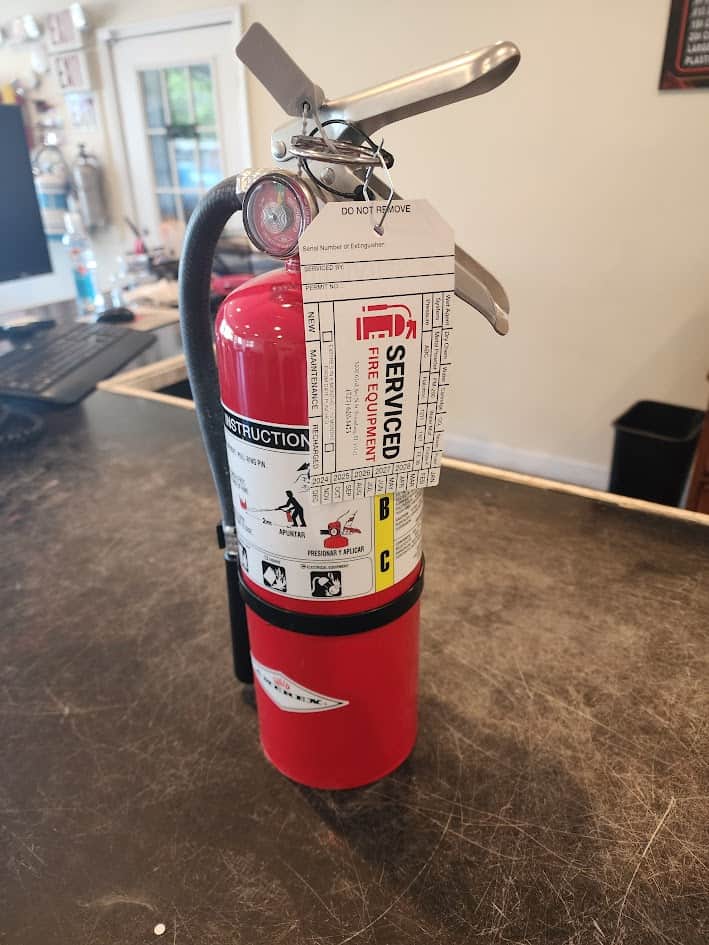
Most Common Type
ABC Multipurpose
The workhorse. ABC powder works on Class A (ordinary combustibles), Class B (flammable liquids), and Class C (electrical equipment) fires. You see these everywhere because they handle most situations.
✓ When to use:
- Offices, warehouses, general commercial
- Small fires on combustibles or flammable liquids
- Electrical equipment (de-energized)
✗ Don't use if:
- Cooking oil fire (Class K)
- Sensitive electronics nearby
- Confined spaces with ventilation concerns
Real talk: ABC is cheap, effective, and reliable. But that powder residue is conductive. Keep it away from server rooms, boats, and anywhere you can't afford messy cleanup.
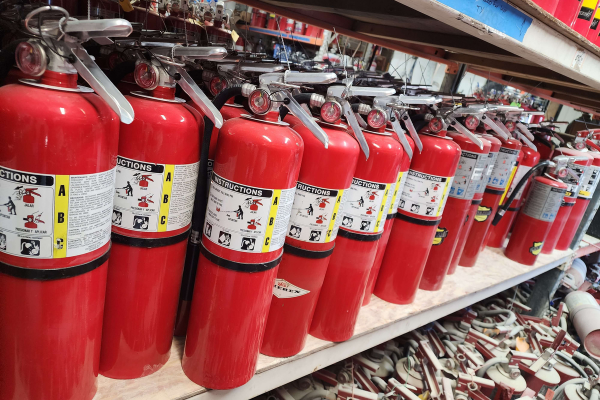
Specialty Type
BC Dry Powder
BC covers Class B (flammable liquids) and Class C (electrical). No Class A coverage. It's specialized—used when you know exactly what you're protecting against and ABC is overkill.
✓ When to use:
- Paint shops, chemical storage
- Electrical equipment areas
- Where you've ruled out combustible material fires
✗ Don't use if:
- Paper, wood, or ordinary combustibles present
- You want one extinguisher for everything
- Staff won't remember the difference
Real talk: BC is niche. ABC does everything BC does plus Class A. Unless you have a specific reason, go ABC.
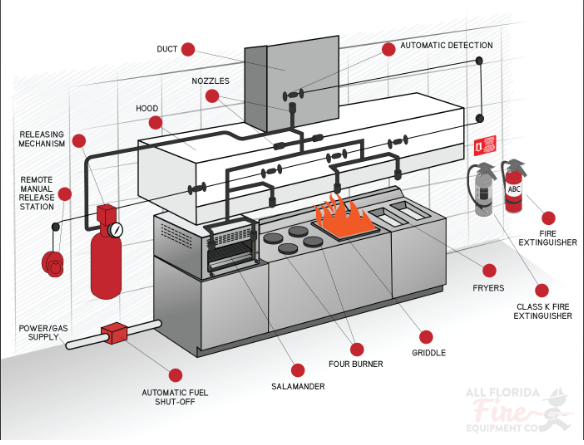
Commercial Kitchen Essential
Class K Wet Chemical
For hot cooking oil fires. The wet chemical formula cools the oil and creates a foam blanket that prevents re-ignition. This is the ONLY safe choice for Class K fires. Water or ABC = explosion.
✓ When to use:
- Commercial kitchens, fryers, griddles
- Any space with hot cooking oil
- Required by code in commercial food prep
✗ Don't use if:
- It's for general building protection
- You don't have hot oil in the space
Real talk: This is code-mandated for a reason. Don't skip it in a kitchen. A kitchen fire with the wrong extinguisher can go catastrophic fast.
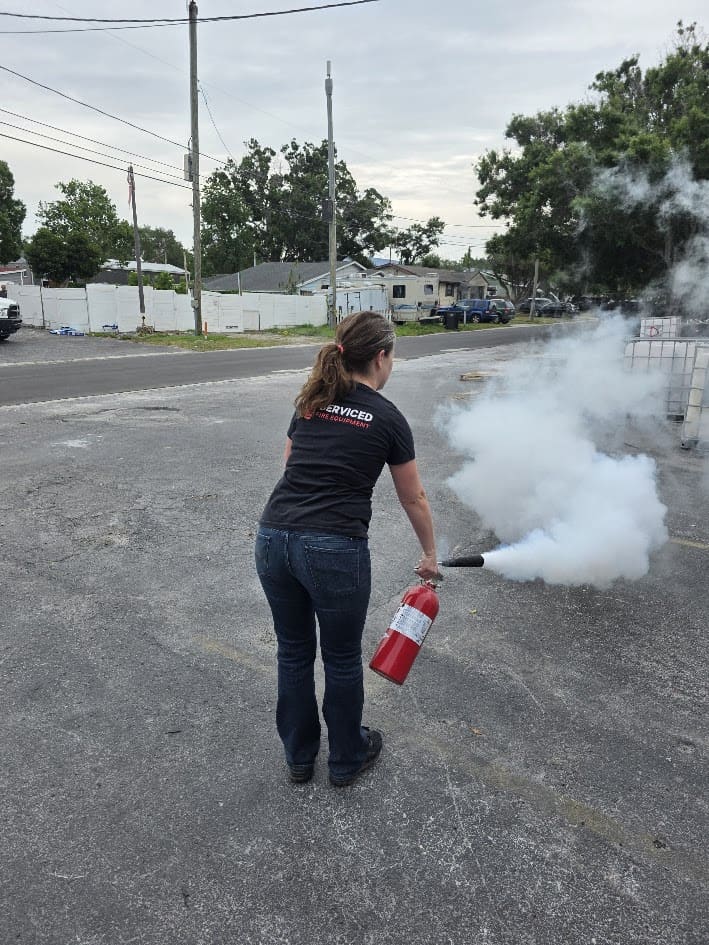
Clean Agent
CO₂ (Carbon Dioxide)
Gas-based. Smothers fire by displacing oxygen. Zero residue—nothing to clean up. Good for electrical equipment and sensitive areas. Trade-off: heavier, colder discharge, harder to aim.
✓ When to use:
- Server rooms, data centers
- Electronics labs, sensitive equipment
- Engine compartments, electrical areas
- Anywhere powder residue is unacceptable
✗ Don't use if:
- Outdoors (blows away in wind)
- You need something portable and easy to handle
- Budget is tight (CO2 costs more)
Real talk: CO2 is solid for electronics. The discharge horn gets COLD—handle it carefully. And in an enclosed space, CO2 displaces oxygen. Don't stick around while it's going.
Gold Standard
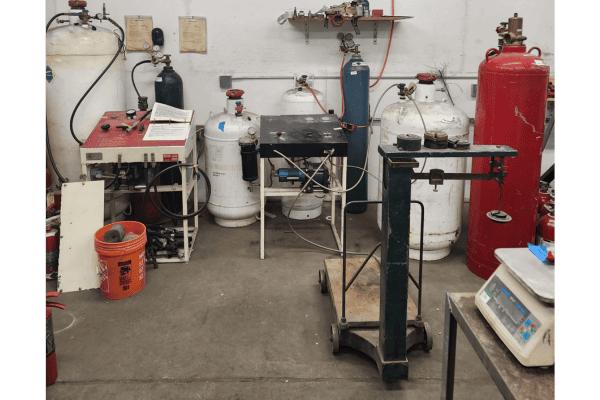
Halon 1211
The gold standard. Halogenated agent (banned for new production, but existing stock is legal to use and recycle). Works on A, B, C fires. Zero residue. Most effective per pound. Most expensive. Most sought-after.
✓ When to use:
- High-value electronics, servers, data
- Aircraft, helicopters
- Boats, engines (especially military/marine)
- Anywhere you need the absolute best
✗ Don't use if:
- Budget is a real constraint
- You need something replaceable long-term (can't make new Halon)
Real talk: Halon is the best. Period. Environmental regs mean you can't buy new, but existing stock is legal and we recycle/recharge it. If you have Halon, keep it. If you can afford it, get it.
Halon Alternative
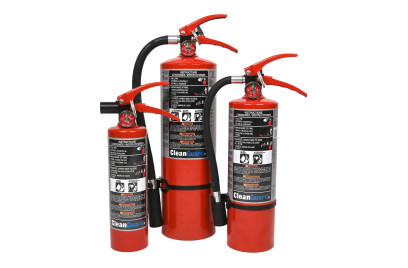
Cleanguard (HFC-236fa)
Clean-burning fluorocarbon designed as a Halon replacement. Works on A, B, C. Zero residue. Lower ozone depletion potential. More environmentally friendly than Halon, though still not perfect. Second choice after Halon.
✓ When to use:
- You want Halon-level performance but can't get Halon
- Environmental compliance matters
- High-value equipment that can't tolerate residue
✗ Don't use if:
- Halon is available and affordable
- Budget is ultra-tight (more expensive than Halotron)
Real talk: Cleanguard is the middle ground. Not quite Halon, but better than most alternatives. If you can't get Halon, this is your move.
Budget Alternative
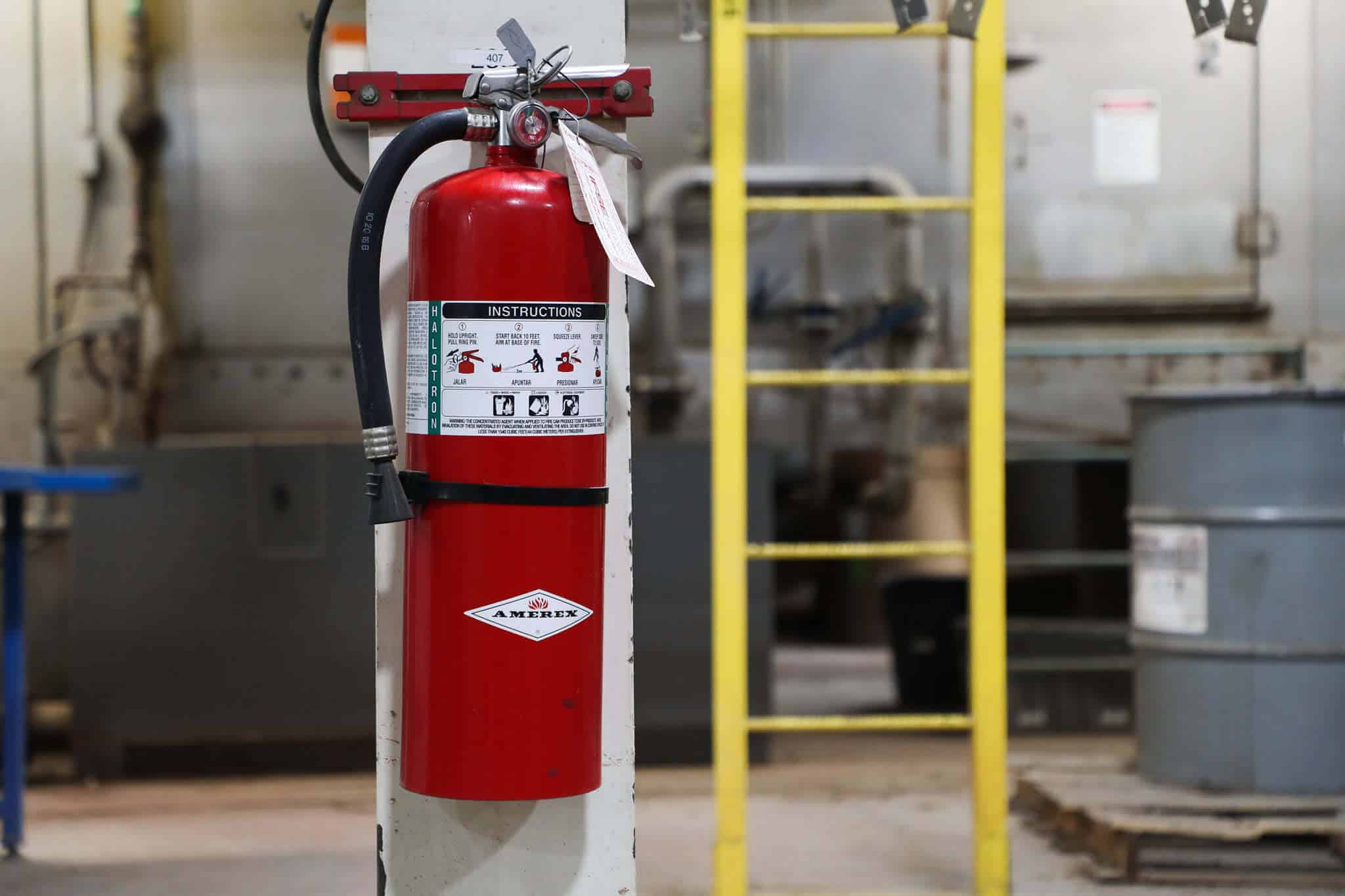
Halotron I (HCFC-123)
Clean agent (hydrofluorocarbon). Performs like Halon for most fires (A, B, C). Cheaper than Cleanguard or Halon. Still leaves virtually no residue. Most widely available clean agent. Most cost-effective step up from CO2.
✓ When to use:
- You need clean-agent performance without breaking the budget
- Electronics areas where residue matters
- Boats, engines, vehicles
- Easier to implement than CO2 or Halon
✗ Don't use if:
- You can get and afford Halon
- Environmental footprint is your only concern (still a hydrocarbon)
Real talk: Halotron is the smart move for most people. You get 80% of Halon's performance at 50% of the cost. Works great on boats, electronics, sensitive equipment. This is what most dealers actually recommend.