Class A Fires: Ordinary Combustibles
What Burns
Anything you'd normally expect to burn. Paper, wood, cardboard, cloth, plastics, trash. If it's a solid material that contains carbon and you can hold it in your hand, it's a Class A fire waiting to happen.
Most common fire class in buildings. Your office has Class A fires everywhere—in the walls (wood framing), in the cabinets (paper and cardboard), in the trash cans, in the decorations. Any electrical failure that starts arcing in a pile of papers becomes a Class A fire.
Why It Burns
Heat + oxygen + fuel. Solid fuels contain carbon. When heated above their ignition temperature in the presence of oxygen, they burn. The fire spreads by transferring heat to surrounding materials, causing them to reach their ignition temperature and join the burn.
Class A fires can be slow (smoldering in a closed cabinet) or fast (flashover in an office). The key is that they're sustained by solid fuel—take away the fuel or cool it below ignition temperature, and the fire stops.
What Stops It
Water. Water absorbs heat faster than almost anything else. It cools the burning material below ignition temperature and also creates steam, which displaces oxygen and smothers the fire. Water-based extinguishers (Class A) work perfectly because they attack the problem directly.
ABC multipurpose powder also works (contains ammonium compounds that cool and smother), but water is faster and more efficient. The powder works, but it leaves a mess.
If You Use the Wrong Extinguisher
CO2 or Halon can work if the fire is small, but they're inefficient. They smother by displacing oxygen, which is slower than water cooling. If you use foam (Class B) on a Class A fire, you'll smother it, but it's not the best tool and you'll waste the agent. The fire will just restart if the material is still hot.
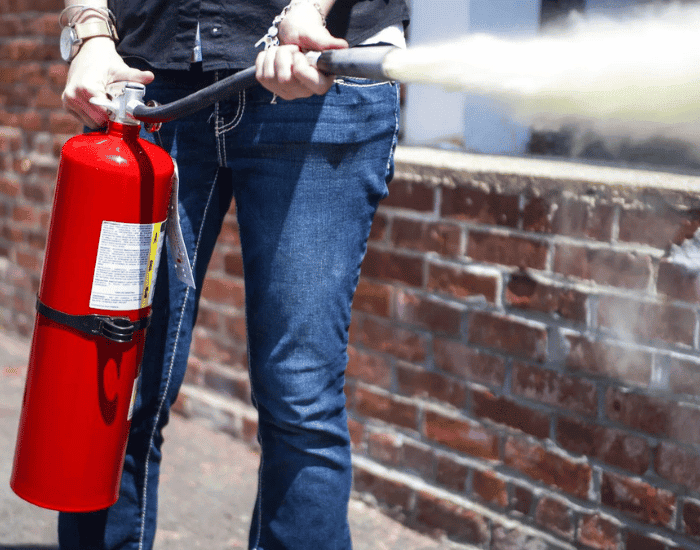
Water-based and ABC extinguishers handle Class A
Class B Fires: Flammable Liquids
What Burns
Gasoline, diesel, oil, paint, solvents, propane, natural gas. Anything that exists as a liquid or gas at normal temperatures and burns. Class B fires are typically in garages, fuel tanks, chemical storage, and anywhere flammable liquids are stored or used.
The danger: Class B fires spread fast because liquid fuel can flow. Spill gasoline across a floor and you've got fuel spread over a huge area. A spark ignites it all at once. Class B fires also produce intense heat and thick smoke.
Why It Burns
Flammable liquids produce vapors. Those vapors, not the liquid itself, are what burn. When heated above the flash point, the liquid releases vapors that mix with oxygen and ignite. The heat from the burning vapors vaporizes more liquid, which burns, creating a self-sustaining cycle.
This is why water doesn't work on Class B fires: water and oil don't mix. Throwing water on burning gasoline just spreads the burning liquid around. You've now got a fire spread across a larger area. Bad idea.
What Stops It
Foam, CO2, dry powder, or halogenated agents. Foam floats on top of the burning liquid, cooling it and creating a barrier that prevents vapors from escaping. CO2 and halogenated agents smother by displacing oxygen. Dry powder also smothers and cools.
The key: you're cutting off oxygen or preventing vapor release, not cooling. Foam is most effective because it addresses both cooling and vapor suppression. ABC powder works because it smothers, though less efficiently than foam.
Foam, CO2, or dry powder stops Class B
Class C Fires: Electrical Equipment
What Burns
Energized electrical equipment. Live wires, energized panels, motors, appliances plugged in and running. The fire isn't primarily the wire itself—it's the insulation around the wire, or nearby materials that catch fire from the heat of the electrical arc.
Class C designation means: use a non-conductive extinguishing agent. The moment you de-energize the circuit, it stops being a Class C fire and becomes whatever it was burning (Class A if it's insulation and nearby materials, Class B if it's oil inside equipment).
Why It Burns
Electrical arcing creates intense heat. Insulation around wires melts and ignites. Oil in transformers and motors can ignite. Equipment overheats and catches surrounding materials on fire. The electricity itself isn't combustible—it's the heat from electrical resistance and arcing.
The danger: water and most extinguishing agents conduct electricity. If you spray water on energized equipment, you complete the circuit and electrocute yourself. This is why Class C extinguishers exist—they're non-conductive.
What Stops It
Non-conductive extinguishing agents: dry powder, CO2, halogenated agents, or Halon. These smother the fire without conducting electricity to you. ABC powder works because it's non-conductive and smothers.
The BEST move: turn off the power. Once it's de-energized, use water or whatever you have. A Class C fire that's no longer energized is just a Class A or B fire. But until it's de-energized, you need a non-conductive agent.
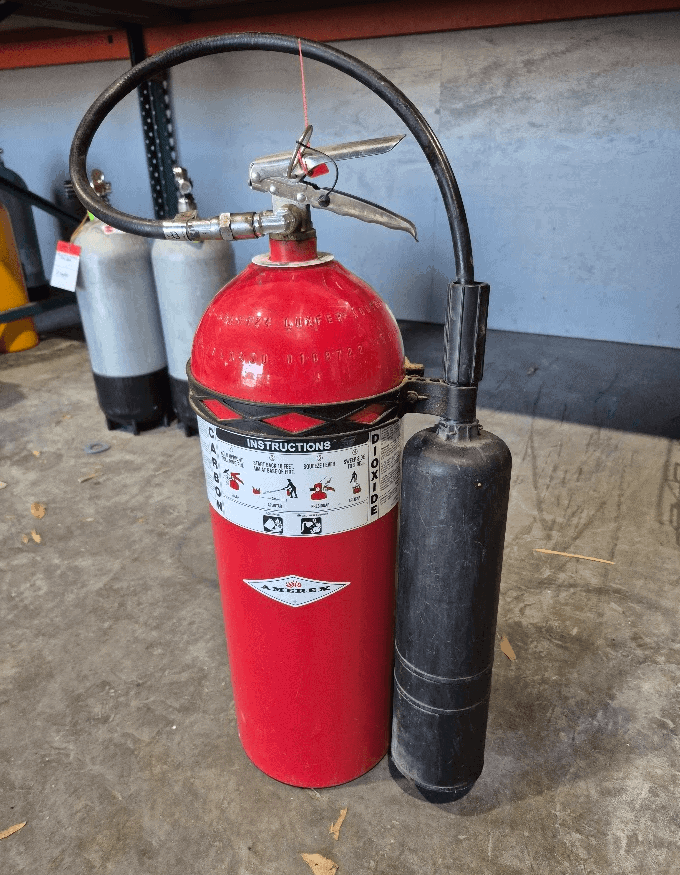
Non-conductive agents only (powder, CO2, Halon)
Class D Fires: Combustible Metals
What Burns
Powdered or shavings of reactive metals: magnesium, titanium, sodium, potassium, lithium, calcium carbide. Rare in typical buildings but common in manufacturing plants, aerospace, metallurgical labs, and anywhere metals are processed or ground.
Class D is specialized. Most people never deal with it. But if you're in manufacturing or aerospace, you need to understand this because the wrong extinguisher makes it catastrophically worse.
Why It Burns
Reactive metals burn at extremely high temperatures and don't need oxygen the way normal fires do. Magnesium can burn in carbon dioxide. Sodium can burn in water. These metals burn because of their chemical reactivity, not just from heat + oxygen + fuel.
The danger: conventional extinguishers make it worse. Water reacts with reactive metals and causes explosions. CO2 can accelerate magnesium fires. ABC powder can actually feed some metal fires by providing oxygen.
What Stops It
Specialized dry powder extinguishers designed specifically for Class D (sodium chloride-based or graphite-based powders). These don't react with the burning metal and smother the fire. Some metals need specific extinguishing agents—check the MSDS for your material.
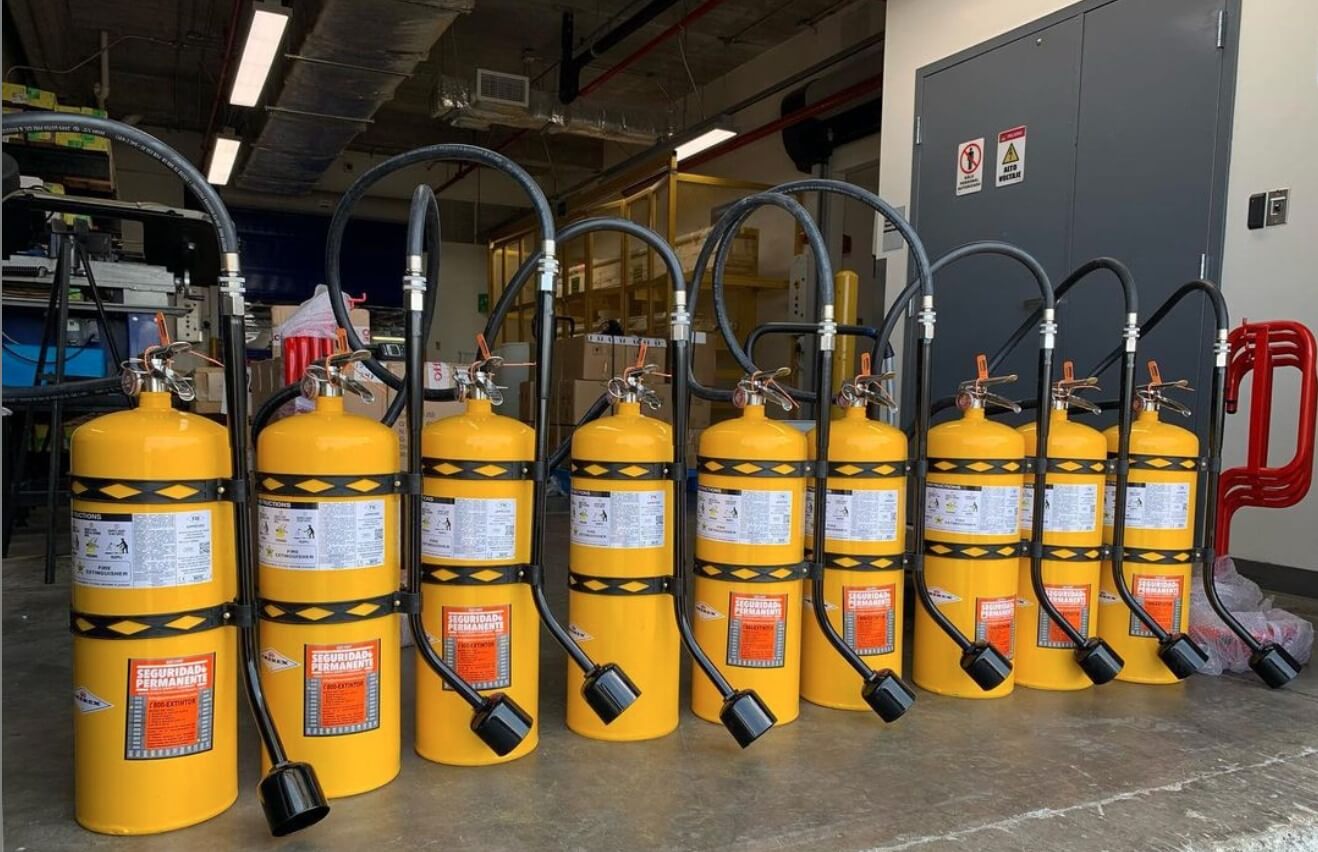
Specialized powder only (NOT water, NOT ABC, NOT CO2)
Class K Fires: Cooking Oil & Fats
What Burns
Hot cooking oil and fat in commercial kitchens. Fryers, griddles, wok stations, deep fryers. This is Class K—created because Class B extinguishers don't work well on hot oil, and water causes explosions.
Every commercial kitchen is one careless moment away from a Class K fire. A grease fire is common, dangerous, and devastating if you don't have the right extinguisher.
Why It Burns
Cooking oil reaches high temperatures (350-400°F+). At those temperatures, it vaporizes. The vapors ignite above the surface of the oil. The heat keeps vaporizing more oil, which burns, which heats more oil. It's a self-sustaining cycle.
The danger: water sinks through hot oil and violently vaporizes when it hits the bottom of the pan. That steam explosion shoots burning oil everywhere. Not theoretical—this happens constantly in kitchens that have the wrong extinguisher or no extinguisher.
What Stops It
Class K wet chemical extinguishers ONLY. The chemical formula cools the oil and creates a foam/soap blanket that seals the surface, preventing vapors from escaping. This stops the burn cycle.
Code requires Class K in commercial kitchens. Not optional. Not a suggestion. Required by fire code. If your kitchen has a fryer, you MUST have a Class K extinguisher nearby. The alternative is a catastrophic kitchen fire that destroys the whole building.
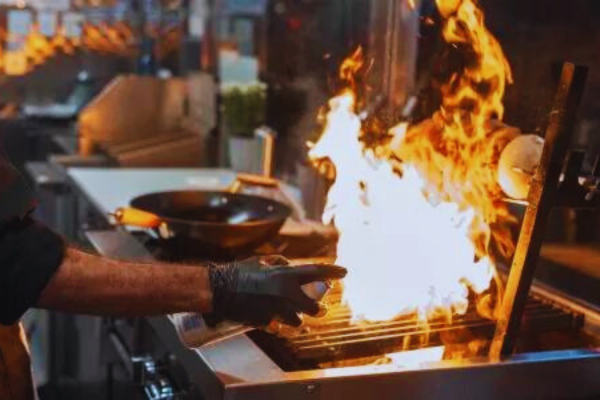
Class K wet chemical extinguisher ONLY