Running a commercial operation in Tampa Bay means navigating fire safety compliance from multiple directions at once: NFPA 10 for portable extinguishers, Florida Fire Prevention Code for state-level requirements, OSHA standards for workplace safety, your local Authority Having Jurisdiction (county or city fire marshal), and your insurance carrier’s requirements. None of these contradict each other, but each adds requirements the others don’t explicitly call out.
This checklist consolidates the practical fire safety compliance items every Tampa Bay business should have in place. It’s not exhaustive — your specific operation may have additional requirements — but it covers the baseline that applies to nearly every commercial facility in the region.
Portable Fire Extinguishers
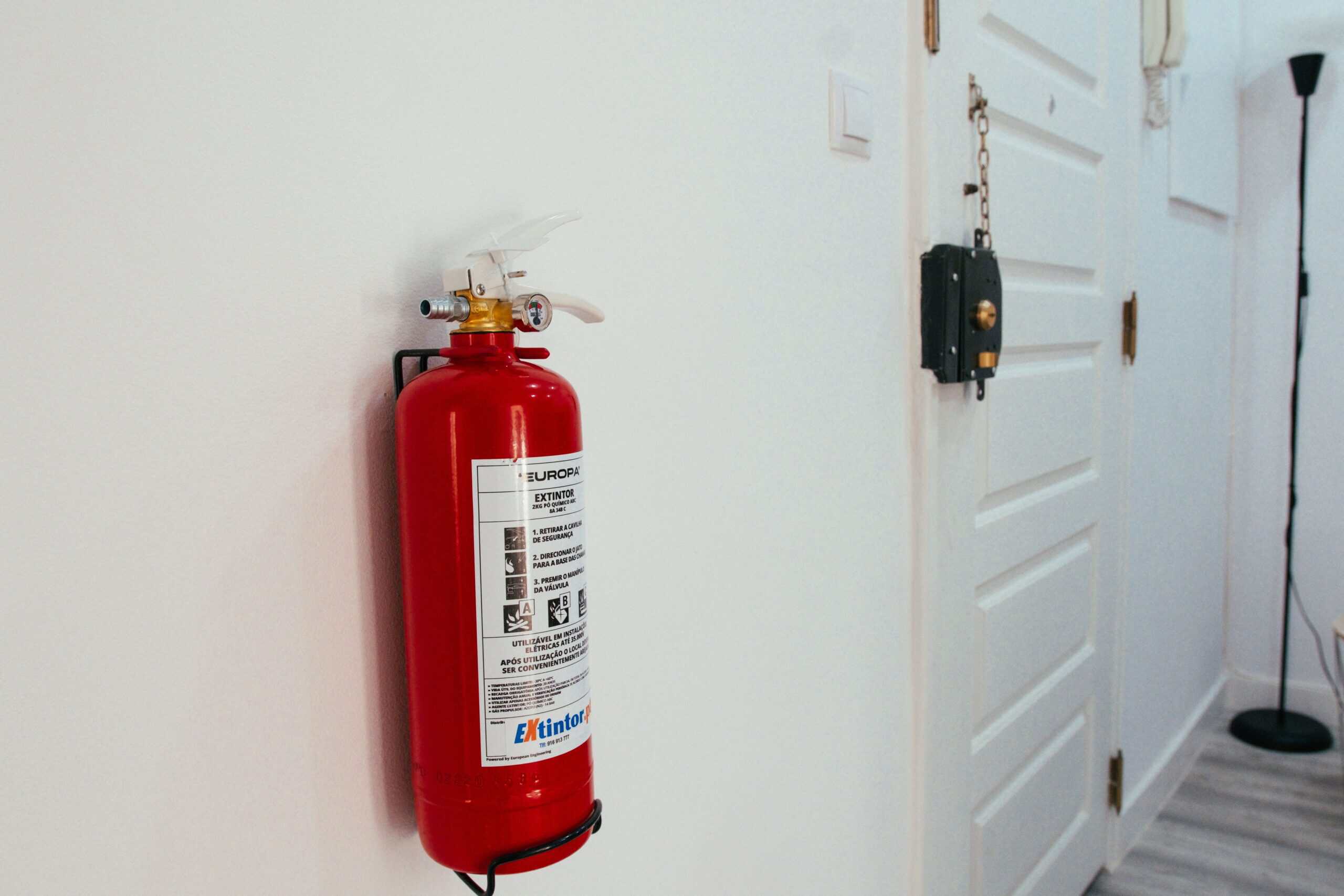
This is the foundation. NFPA 10 governs portable fire extinguisher selection, placement, and maintenance.
- Correct quantity based on building square footage and hazard classification (typically one 2A extinguisher per 3,000-6,000 sq ft depending on hazard)
- Correct rating for the hazards in each area (Class A minimum everywhere, Class B near flammable storage, Class K near commercial cooking equipment)
- Maximum 75-foot travel distance from any point to nearest Class A extinguisher
- Proper mounting height — top of unit no more than 5 feet from floor for units under 40 lbs
- Clear access — no obstructions within 36 inches
- Visible signage above units in line-of-sight obstructed areas
- Current annual inspection tag from a Florida State Fire Marshal-licensed technician
- Monthly visual inspection log maintained on-site
For detailed placement guidance, see our NFPA 10 placement guide.
Kitchen and Cooking Equipment (if applicable)
If your facility includes commercial cooking equipment using vegetable or animal oils — fryers, grills, woks, charbroilers — you have additional requirements:
- Class K wet chemical extinguisher within 30 feet of cooking line
- Pre-engineered hood suppression system covering cooking equipment, with current semi-annual inspection
- Hood suppression certification from a Florida State Fire Marshal Class 04-licensed technician (every 6 months)
- Manual pull station for hood suppression accessible to staff
- Cleaning records for hood and duct cleaning (required by NFPA 96 at varying intervals based on cooking volume)
- Posted instructions for hood suppression activation visible to staff
Our kitchen suppression system service covers commercial kitchen requirements specifically. Tampa Bay restaurants, particularly in Tampa and Brandon, often have additional county-specific requirements layered on top of state code.
Emergency Lighting and Exit Signs
Florida fire code and NFPA 101 (Life Safety Code) require:
- Illuminated exit signs at every required exit, visible from any direction of approach
- Emergency lighting in egress paths, corridors, stairs, and assembly areas
- Battery backup providing at least 90 minutes of illumination during power loss
- Monthly functional test of emergency lighting (30-second test typically)
- Annual full-duration test of emergency lighting (90-minute test, documented)
- Test records maintained for inspection
Sprinkler Systems (if installed)
Buildings with sprinkler systems have NFPA 25 inspection and testing requirements separate from extinguisher requirements:
- Quarterly visual inspection of valves, gauges, and components
- Annual flow test performed by a licensed contractor
- 5-year internal inspection of pipe and fittings
- Documentation of all tests and inspections
- Backflow preventer testing per Florida code (typically annual)
Sprinkler service is typically handled by a separate sprinkler contractor — fire extinguisher companies don’t usually service sprinkler systems and vice versa.
Fire Alarm Systems
Buildings with fire alarm systems follow NFPA 72 requirements:
- Annual inspection and testing of all components
- Sensitivity testing for smoke detectors (typically every 2 years)
- Battery replacement per manufacturer schedule (typically every 4-5 years for sealed lead-acid)
- Monitoring service if your system is connected to a central station
- Documentation of all tests, inspections, and trouble events
Marine Vessel Fire Equipment (if applicable)
Businesses operating vessels in Tampa Bay waters (charter operators, marinas, commercial fishing, marine contractors) have Coast Guard requirements layered on top of NFPA standards:
- USCG-approved fire extinguishers appropriate to vessel size and class
- Annual inspections documented for Coast Guard verification
- Fixed suppression systems in engine rooms for vessels above certain sizes
- Hydrostatic testing at standard NFPA intervals
Our marine fire system service covers vessel-specific requirements, including Sea-Fire and Fireboy-Xintex system service.
Facility Documentation
Beyond the equipment itself, fire marshal inspections typically request documentation:
- Annual inspection records for all fire equipment
- Monthly inspection logs for portable extinguishers
- Monthly and annual test records for emergency lighting
- Hood cleaning records (restaurants)
- Sprinkler and alarm system inspection records
- Employee training records — particularly fire extinguisher use training and emergency evacuation procedures
- Evacuation plans posted in conspicuous locations throughout the facility
- Floor plans showing extinguisher locations, emergency exits, and assembly areas
Most businesses keep this documentation in a binder at the facility or in a facility management system. Format isn’t strictly regulated — currency and completeness are what matter.
Employee Training
OSHA requires that employees expected to use fire extinguishers be trained on their use:
- Initial training upon hire or assignment of fire safety responsibilities
- Annual refresher training for designated fire safety personnel
- Documentation of training completed (date, attendees, content covered)
- Practical training on PASS technique (Pull, Aim, Squeeze, Sweep)
- Familiarization with the specific extinguisher types in the facility
- Evacuation procedure training for all employees
Our how to use a fire extinguisher guide can be used as a training resource. For businesses wanting formal training, fire equipment companies and local fire departments often offer free or low-cost sessions.
Specific Florida Code Requirements
The Florida Fire Prevention Code adopts NFPA 1 and NFPA 101 as the foundation, with state-specific modifications. Key items beyond standard NFPA:
- Hurricane preparedness requirements for fuel storage and emergency power in certain occupancies
- Specific occupancy classifications for assembly, healthcare, and educational facilities
- Inspection schedules set by local AHJ (county fire marshal) — some Tampa Bay counties have shorter intervals than NFPA baseline
Our overview of Florida fire extinguisher requirements covers state-specific items, and OSHA requirements are covered separately.
Insurance and Liability
Beyond code compliance, your commercial insurance policy likely has its own requirements:
- Maintain ongoing NFPA 10 compliance as a policy condition
- Provide inspection records at policy renewal
- Notify insurer of significant facility changes (additions, occupancy changes, hazard changes)
- Use licensed and certified service providers — using uncertified contractors can void policy coverage
Many policies offer reduced premiums for businesses that maintain documented above-baseline fire safety — particularly for restaurants, healthcare, and high-value occupancies.
Tampa Bay-Specific Considerations
The Tampa Bay climate adds a few practical compliance considerations:
Humidity acceleration of dry chemical clumping. Even within NFPA 10’s standard intervals, units exposed to high humidity may need 6-year maintenance somewhat earlier. Plan accordingly.
Coastal corrosion. Units mounted in loading docks, exterior locations, or marine settings face accelerated cylinder corrosion. Monthly inspection should specifically check the cylinder base.
Hurricane preparedness. Fuel storage, emergency power, and life-safety equipment all face seasonal scrutiny. Pre-hurricane season is a good time for facility-wide compliance audits.
Tourist-heavy occupancies. Restaurants and hospitality in Tampa Bay tourist zones face higher inspection frequency because of occupancy volume.
Putting the Checklist into Practice
For most Tampa Bay businesses, a complete fire safety compliance audit takes 2-4 hours including documentation review. We provide this as part of service for clients across St. Petersburg, Tampa, Brandon, Pinellas Park, Riverview, and Dunedin. The audit identifies gaps before they become citation issues.
The Bottom Line
Fire safety compliance in Tampa Bay isn’t complicated — but it has many components that need to be in place simultaneously. Portable extinguishers are the foundation, but kitchen suppression, emergency lighting, alarms, sprinklers (where installed), employee training, and documentation all matter. Most businesses are 80% compliant and miss 20% — the gap is where citations and insurance issues originate. Working through this checklist annually keeps the gap closed.
Tampa Bay Compliance Audits
Serviced Fire Equipment provides fire safety compliance audits for businesses across Tampa Bay. Florida State Fire Marshal Class 01 and 04 licensed, DOT-certified for hydrostatic testing, Tier 1 Amerex distributor. Walk-in service at our St. Petersburg location.
Frequently Asked Questions
What fire safety compliance does a Tampa Bay business need?
At minimum: NFPA 10 compliant portable fire extinguishers, annual professional inspections by a Florida State Fire Marshal-licensed technician, monthly visual inspections, current emergency lighting and exit signs, employee training on fire extinguisher use, and posted evacuation plans. Restaurants add Class K extinguishers, hood suppression systems, and hood cleaning. Sprinklered or alarm-equipped buildings add NFPA 25 and NFPA 72 requirements.
How often does the fire marshal inspect commercial buildings in Tampa Bay?
Inspection frequency varies by occupancy type and local AHJ. Restaurants, healthcare, and assembly occupancies typically face annual inspection. General commercial may be inspected every 1-3 years. Triggering events (citations, complaints, renovations, occupancy changes) prompt additional inspections. Pre-renewal annual audits help identify issues before scheduled inspections.
Do I need a Class K extinguisher if I only have a small kitchen?
It depends on the cooking equipment. Class K is required within 30 feet of commercial cooking equipment using vegetable or animal oils/fats — fryers, charbroilers, woks, large griddles. Light food service equipment (microwave, coffee maker, small range) typically doesn’t trigger the Class K requirement. When in doubt, consult your local fire marshal or a licensed Class 04 technician.
What documentation does a fire marshal want to see during inspection?
Annual inspection tags on each extinguisher, monthly visual inspection log, hood suppression certification (restaurants), emergency lighting test records, sprinkler/alarm system inspection records (if applicable), employee fire safety training records, and posted evacuation plans. Most businesses keep this in a fire safety binder at the facility or in their facility management system.
Can I get a fire safety compliance audit for my business?
Yes. We provide compliance audits for Tampa Bay businesses as part of our service, typically taking 2-4 hours depending on facility size. The audit identifies gaps before they become citation issues — particularly useful before scheduled fire marshal inspections, after build-outs, or when changing occupancy types. We’re Florida State Fire Marshal Class 01 and 04 licensed.
Get Compliant Today — Tampa Bay Walk-In Service
Inspection, certification, recharge, kitchen suppression & more. Florida-licensed, NFPA 10 & OSHA compliant. No appointment needed.
CALL (727) 620-3473 — WALK-IN SERVICE3200 62nd Ave N, St. Petersburg, FL · Mon–Fri · Serving All of Tampa Bay