Hydrostatic testing is a safety verification process for pressure vessels. Fire extinguishers, SCUBA tanks, SCBA cylinders, CO₂ tanks, and other containers that store compressed gases or liquids. The test works by pressurizing the empty vessel with water to a level significantly above its normal operating pressure, then measuring whether the vessel permanently deforms. Permanent deformation indicates structural fatigue or material degradation that compromises the vessel’s ability to safely contain pressure during normal use. And such a vessel goes out of service from service before it can fail catastrophically.
For businesses throughout Florida, understanding hydrostatic testing is important for two reasons: it’s required by law at specified intervals for fire extinguishers used in commercial properties, and non-compliance creates both regulatory liability and genuine safety risk. This guide covers everything you need to know. The science, the regulatory requirements, the testing process, and where to get certified hydrostatic testing in the Tampa Bay area.
The Physics Behind Hydrostatic Testing
Pressure vessels are engineered to contain gases or liquids at specific operating pressures. Over time, the materials that make up these vessels. Steel, aluminum, composite fiber. Experience stress from repeated pressurization cycles, exposure to corrosive agents (water, CO₂, dry chemical agents), temperature cycling, and the cumulative effects of normal use. These stresses can cause:
Material Fatigue: Every pressurization cycle causes microscopic stress in the cylinder material. Over thousands of cycles, this can initiate and propagate cracks that are invisible externally but progressively weaken the cylinder’s pressure-bearing capacity. Fatigue cracks grow slowly and unpredictably. A vessel that passed visual inspection last year could have a crack that reaches critical length this year, causing failure during normal use.
Extinguisher Types by Agent
Corrosion: The interior of pressure vessels is exposed to whatever agent they contain. Moisture in a fire extinguisher cylinder, CO₂ condensate in a CO₂ cylinder, or contaminated fill air in a SCUBA tank can initiate internal corrosion that reduces effective wall thickness. A cylinder that started with 0.25-inch steel walls might have 0.18-inch effective wall thickness after years of internal corrosion. A 28% reduction in pressure-bearing capacity that a visual inspection would never reveal.
Physical Damage: Dents, impacts, and structural deformation from being knocked over, struck by equipment, or mishandled can create stress concentrations in the cylinder wall that make that location more susceptible to failure. External damage that appears minor may have significant internal consequences for pressure integrity.
This means that Hydrostatic testing catches all of these failure modes before they cause catastrophic failure. When a cylinder is pressurized to test pressure (typically 5/3 of service pressure), a cylinder with structural compromise will expand permanently under this pressure. More than manufacturer-specified tolerances allow. This permanent expansion is the failure signal that condemns the cylinder and removes it from service before a real-world failure can occur.
Legal Requirements: Who Must Have Hydrostatic Testing Done
In addition, NFPA 10, the National Fire Protection Association’s Standard for Portable Fire Extinguishers, specifies hydrostatic testing intervals for all types of portable fire extinguishers. Florida adopts NFPA 10 through the Florida Fire Prevention Code, making these intervals legally mandatory for commercial properties in Florida. Fire marshal inspections of commercial buildings check hydrostatic test stamps on extinguisher cylinders as part of comprehensive compliance reviews.
The testing intervals specified in NFPA 10 Table 8.3.1 are:
What’s more, Stored-pressure water and water-based extinguishers every 5 years. CO₂ extinguishers every 5 years. Dry chemical stored-pressure extinguishers every 12 years. Dry chemical cartridge-operated extinguishers every 12 years. Clean agent (Halon, Halotron, Cleanguard) extinguishers every 5 to 12 years, depending on the specific type. Wet chemical (Class K) extinguishers every 5 years.
DOT regulations govern the hydrostatic testing of all compressed gas cylinders used in transportation. This includes CO₂ cylinders, SCUBA tanks, SCBA cylinders, and medical gas cylinders. DOT requires 5-year hydrostatic testing for most of these cylinder types.
Beyond this, for businesses in St. Petersburg, Tampa, Clearwater, and throughout Tampa Bay. For SCUBA divers and dive shop operators across Florida’s west coast. Serviced Fire Equipment is a DOT-certified hydrostatic testing facility providing fully compliant testing and documentation. Learn more about our testing services.
The Hydrostatic Testing Process: Step by Step
Notably, the water jacket method is the DOT-required hydrostatic testing method for most fire safety and SCUBA cylinders. Here’s exactly what happens:
Pre-Test Inspection: The cylinder is completely emptied, cleaned inside and outside, and thoroughly inspected before any testing begins. Cylinders with obvious severe damage. Deep corrosion, cracks visible in any wall, significant dents, or damaged threads. Are condemned without testing. Testing a cylinder with clear structural failure is a safety hazard. Pre-test inspection eliminates cylinders that should never enter the test jackets.
Understanding the Hydrostatic Testing Process
Setup in Water Jacket: The empty cylinder is filled completely with water (eliminating any air), sealed, and placed inside a sealed steel test jacket also filled with water. The water jacket is connected to precision gauges that measure water displacement as the cylinder expands under pressure.
Pressurization: High-pressure water is pumped into the cylinder, raising the internal pressure gradually to the specified test pressure. Most fire extinguisher cylinders use 5/3 (167%) of their marked service pressure. A cylinder with 150 PSI service pressure undergoes testing at 250 PSI. For high-pressure cylinders like CO₂ units (850 PSI service) face test pressures of 1,400 PSI or higher.
Expansion Measurement: As the cylinder expands under test pressure, water is displaced from the annular space between the cylinder and the jacket. This displacement is precisely measured and recorded. This represents the total expansion of the cylinder under test pressure.
Pressure Release: Test pressure is released, and the cylinder is allowed to return to ambient pressure. The water that returns to the jacket is measured. This represents the elastic expansion that reversed when pressure was released. The difference between total expansion and elastic expansion is the permanent expansion.
Pass/Fail Determination: If the permanent expansion is within the manufacturer’s tolerance (typically 10% of total expansion or a specific number of cubic centimeters), the cylinder passes. If permanent expansion exceeds tolerance, the cylinder fails and gets condemned.
Post-Test Processing: Cylinders that pass are dried internally (moisture left inside causes corrosion), refilled with agent, repressurized, and stamped with the DOT-format test date (month/year in specified format) and testing facility symbol. These stamps are permanent marks on the cylinder metal. Not labels or tags that can fall off.
What Happens When a Cylinder Fails?
A cylinder that fails hydrostatic testing gets condemned. Permanently removed from service. DOT regulations require that condemned cylinders be rendered permanently unusable, typically by cutting through the cylinder wall or destroying the valve and valve threads. Condemned cylinders cannot be repaired, retested, or returned to service under any circumstances. This is a hard rule, and it’s the right one: a cylinder with structural integrity compromised enough to fail a hydrostatic test is a cylinder that cannot be trusted at operating pressure.
In practice, Serviced Fire Equipment handles the disposal of condemned cylinders as part of our testing service. We render the cylinder permanently unusable and process it for scrap metal recycling. Customers don’t need to worry about the legal requirements for condemned cylinder disposal. We manage it. For businesses that have condemned cylinders to dispose of, our free disposal service handles them at no additional charge.
Beyond Fire Extinguishers: All Pressure Vessel Testing
Serviced Fire Equipment provides hydrostatic testing for multiple pressure vessel types beyond fire extinguishers: SCUBA tanks (required every 5 years by DOT); SCBA cylinders used by fire departments and industrial emergency responders; CO₂ cylinders for fire extinguishers and beverage systems; marine suppression system cylinders. Other compressed gas cylinders on a case-by-case basis. Our facility uses DOT-certified testing equipment operated by trained technicians for all vessel types.
Keep in mind: Above all, For SCUBA divers throughout Clearwater, Dunedin, Pinellas Park, and the broader Tampa Bay area, our facility provides the complete SCUBA tank annual service: visual inspection, eddy current testing for aluminum cylinders, and hydrostatic testing when required. For fire departments and industrial emergency response organizations in Brandon, Riverview, and Pasco County, we provide SCBA cylinder hydrostatic testing with fast turnaround to minimize operational impact.
Walk-in service is welcome for customers bringing cylinders to our St. Petersburg facility. For large quantities or cylinders that are inconvenient to transport, contact us to discuss logistics. Learn more about hydrostatic testing or contact us today.
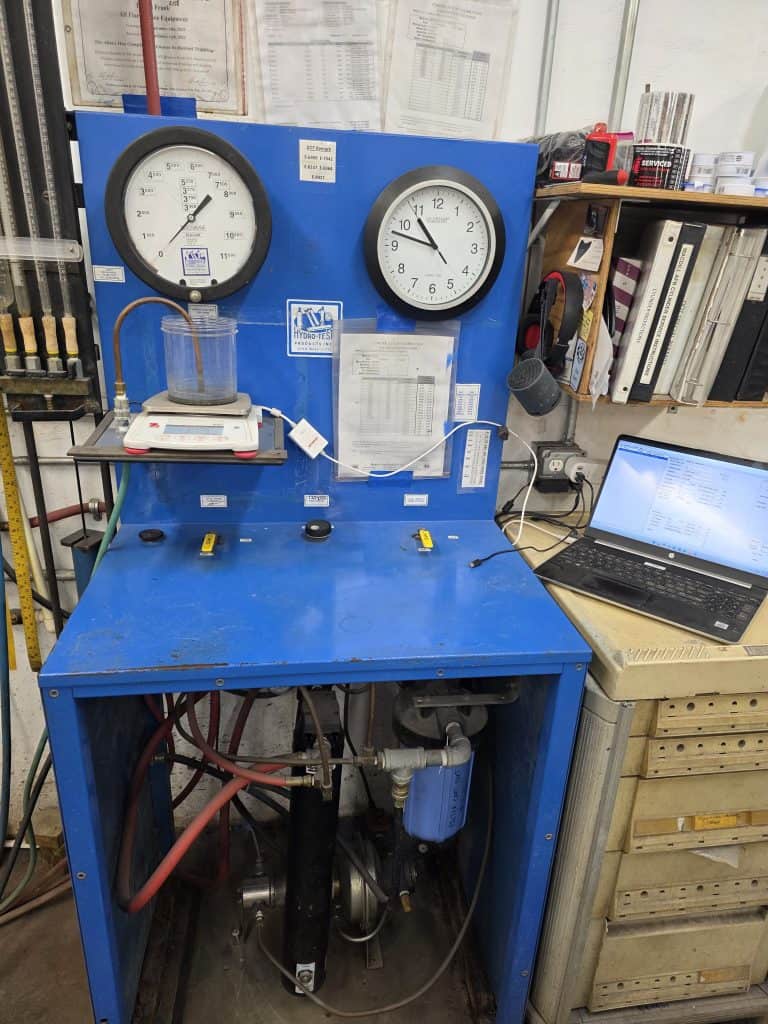
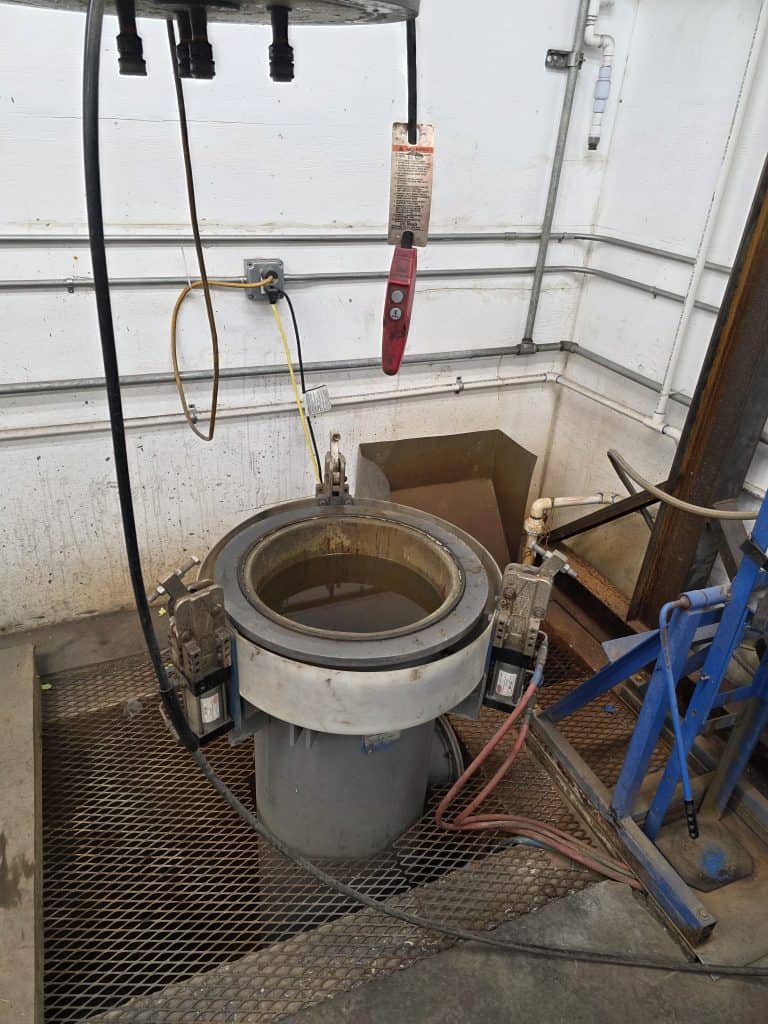
Hydrostatic Testing — In-House, DOT Authorized
We perform all pressure vessel testing in-house with DOT RIN D133 certification. No outsourcing, no waiting weeks. Walk in or ship it.
CALL (727) 620-3473 — HYDROSTATIC TESTINGDOT RIN D133 · St. Petersburg, FL · All Cylinder Types