Fire Extinguisher Compliance Guide
How Often Should Fire Extinguishers Be Inspected?
The complete inspection schedule under NFPA 10 and OSHA — monthly checks, annual inspection, 6-year maintenance, and hydrostatic testing — what each one requires, who can perform it, and what it costs.
By Daniel Beauchesne, Florida State Fire Marshal Licensed Technician · License #EF-0001479 · Class 01 & 04 · 25+ Years
The Short Answer
Under NFPA 10 and OSHA 1910.157, fire extinguishers in commercial settings require four levels of inspection and maintenance on different schedules. The answer to "how often" depends on which type of inspection you are asking about.
Most businesses are aware of the annual inspection because it produces a visible tag on the extinguisher. Many are not aware of the monthly visual requirement, most have never heard of the 6-year internal maintenance, and almost nobody tracks the hydrostatic testing interval until an inspector flags it. All four are required for compliance under NFPA 10 and OSHA 1910.157.
Monthly Visual Inspection — Your Responsibility
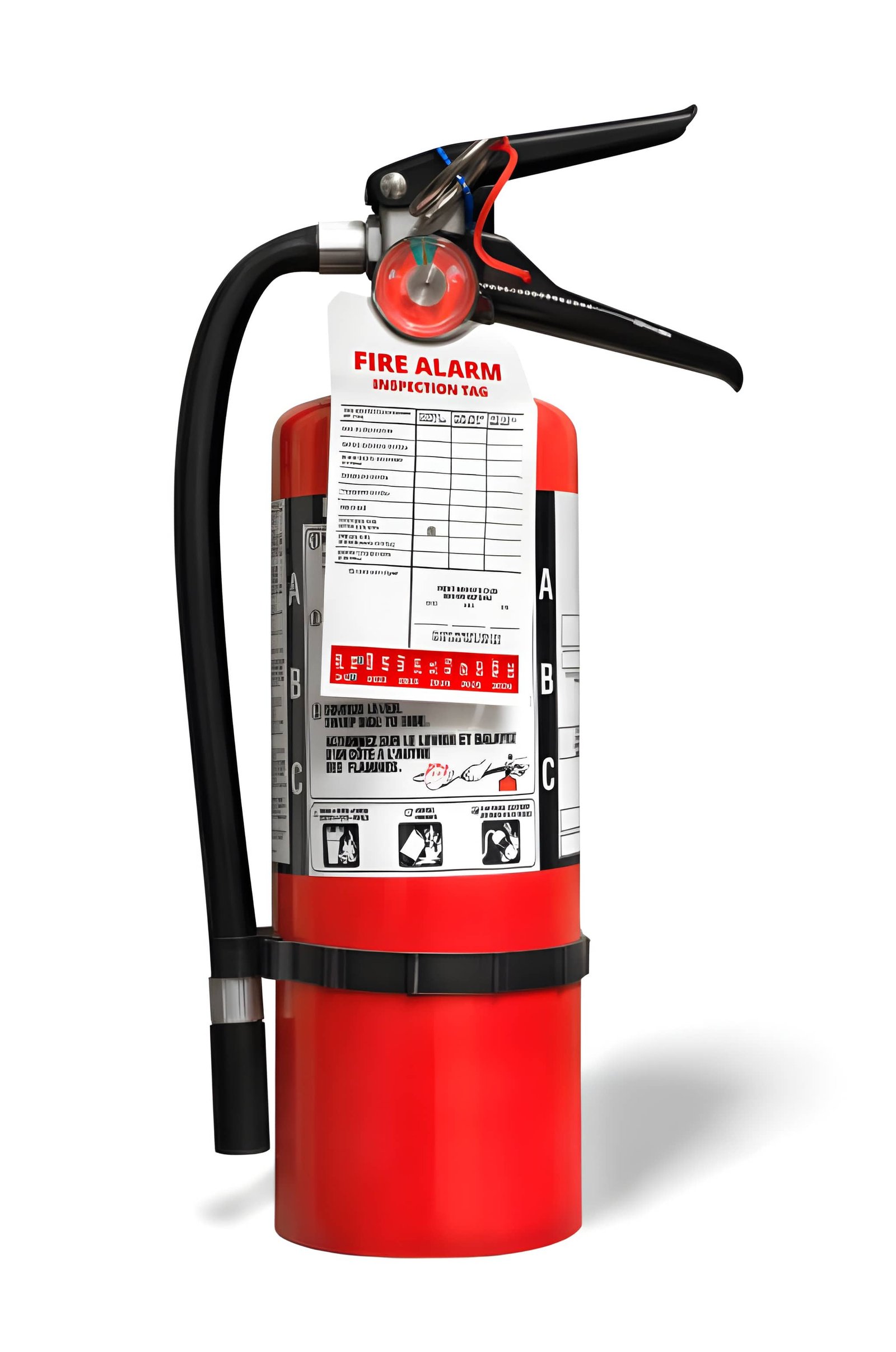
NFPA 10 Section 7.2 requires that fire extinguishers be visually inspected at least monthly by the occupant of the premises. This is not a technician visit — it is a quick check performed by the business owner, facilities manager, or designated employee. It takes about 30 seconds per unit.
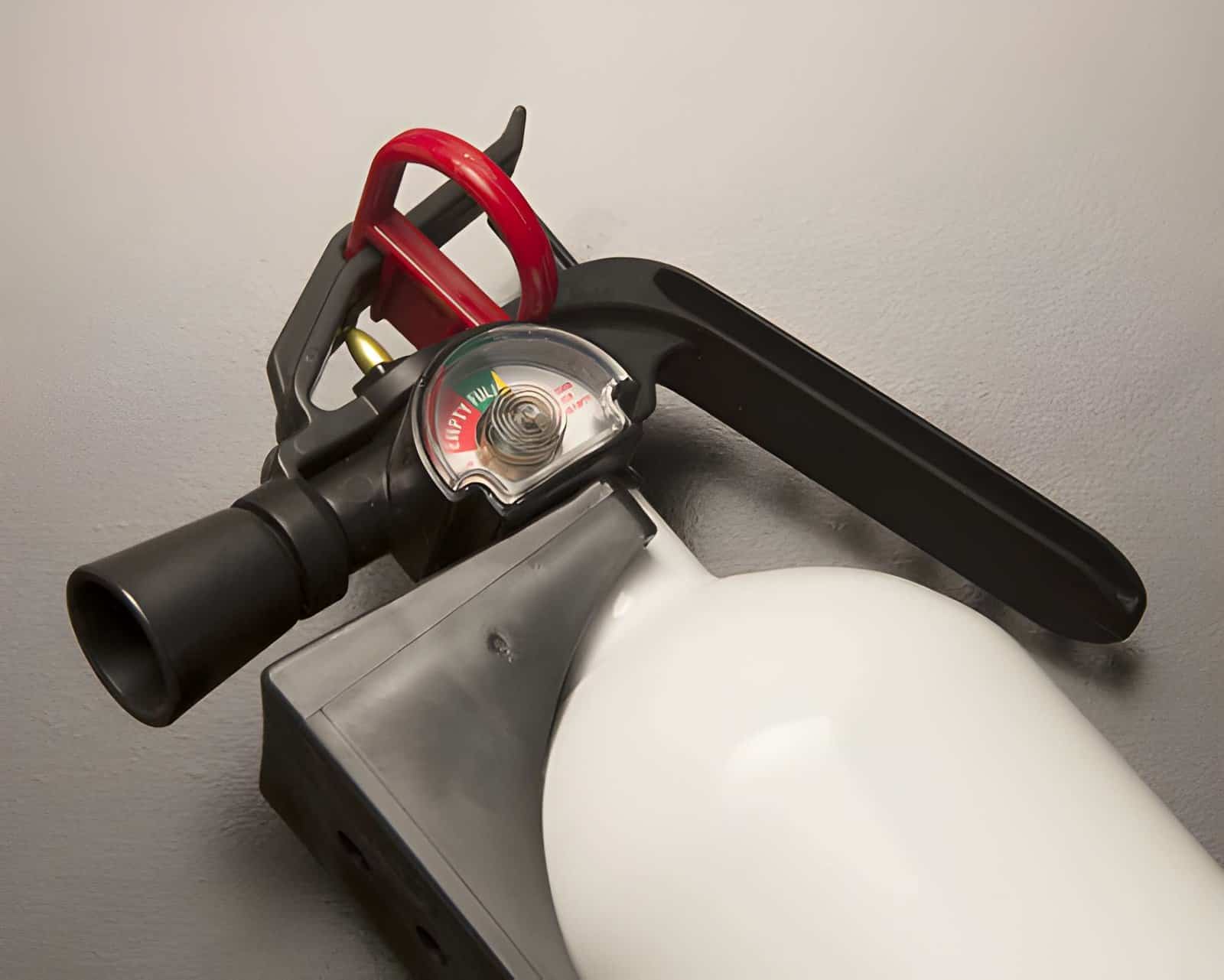
Monthly checks are required but almost nobody does them formally. What I recommend to my commercial customers: assign one person, put it on the calendar, take 30 seconds per unit. You are not looking for anything complicated — you are looking for the three obvious problems: pressure gauge out of green, tamper seal broken, unit missing from its location. Those three things account for the vast majority of compliance failures I find on annual inspection. A monthly check catches them before they become violations.
Annual Inspection — Required by Law, Performed by a Licensed Technician
NFPA 10 Section 7.3 and OSHA 1910.157(e) both require that portable fire extinguishers be inspected at least annually by a qualified person. In Florida, this means a Florida State Fire Marshal licensed technician. The annual inspection is not the same as the monthly visual check — it is a thorough examination of every component by someone with the training and credentials to identify what is wrong and fix it.
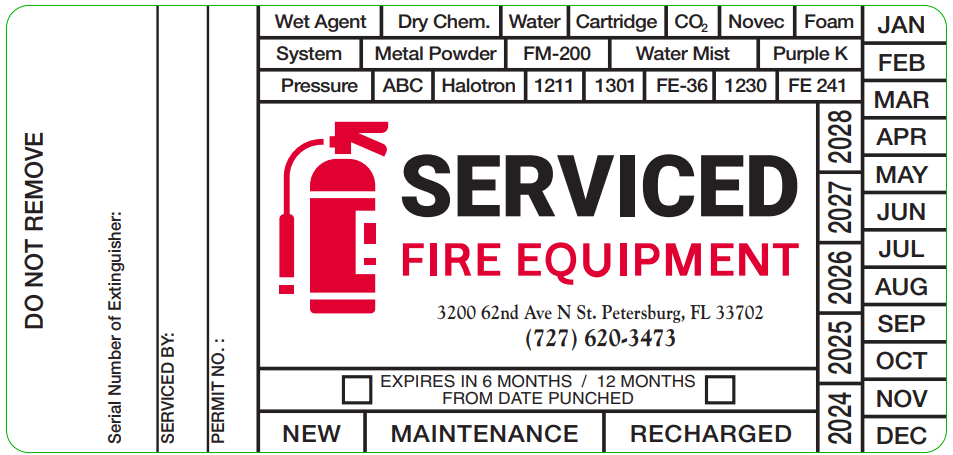
Florida Statute Chapter 633 and Florida Administrative Code Rule 69A-21 require that fire extinguisher inspection and certification be performed by a dealer licensed by the Florida State Fire Marshal. The technician's license number must appear on the inspection tag — it is how the work is verified as legitimate during a fire marshal or OSHA inspection.
An inspection performed by an unlicensed person — including the business owner — does not satisfy the annual inspection requirement under Florida law. The tag must be signed by a licensed technician.
Starting at $8 per unit. Most walk-in visits under 10 minutes. No appointment needed. Daniel Beauchesne — Florida State Fire Marshal Licensed Technician, License #EF-0001479, Class 01 & 04.
Annual Inspection Service →The tag on your fire extinguisher records the inspection date, the technician's name and license number, and any service performed. It is not just a compliance sticker — it is the legal record that demonstrates the extinguisher was inspected by a qualified person on the date shown. During an OSHA inspection or fire marshal visit, the tag is the primary evidence of compliance. A missing tag, an expired tag, or a tag without a license number is a citation item.
6-Year Internal Maintenance — The Interval Most Businesses Don't Know About
NFPA 10 Section 7.4 requires that stored pressure dry chemical fire extinguishers undergo internal maintenance every six years from the date of manufacture or the last 6-year service. This is significantly more involved than annual inspection and is one of the most commonly missed compliance requirements I find when I service new commercial accounts.
The 6-year interval is based on the date on the cylinder nameplate — not the date of the last annual inspection. A unit that has been annually inspected for five years straight is still due for 6-year internal maintenance at the six-year mark.
When I take on a new commercial account that has been using the same extinguishers for years, 6-year maintenance is almost always overdue. Business owners see an annual tag that says "inspected" and assume everything is current. The annual inspection does not include internal maintenance — they are separate requirements on separate schedules. I have opened extinguishers that had been annually tagged for 8 years with caked, degraded agent and corroded valve components inside. The unit would not have functioned in a fire. A full service history means both the tag and the internal maintenance are current.
Complete Inspection Schedule by Extinguisher Type
Every extinguisher type has its own complete maintenance schedule. Use this table as a reference for your facility's compliance calendar.
| Extinguisher Type | Monthly | Annual | 6-Year | Hydrostatic Test | Notes |
|---|---|---|---|---|---|
| ABC dry chemical (stored pressure) | ✓ | ✓ | ✓ | 12 years | Most common commercial unit. Recharge starts at $25. |
| CO2 (carbon dioxide) | ✓ | ✓ | ✓ | 5 years | 5-year hydro most commonly missed. No gauge — check by weight. Recharge starts at $35. |
| Class K wet chemical | ✓ | ✓ | ✓ | 12 years | Hydro included in recharge when due. Recharge $195. |
| Clean agent (Halotron, Cleanguard) | ✓ | ✓ | ✓ | 12 years | Recharge starts at $130 plus agent cost. |
| Water / water mist | ✓ | ✓ | ✓ | 5 years | More susceptible to internal corrosion — more frequent hydro required. |
| Non-rechargeable (disposable) | ✓ | ✓ | N/A | N/A | 12-year maximum service life — replace at 12 years regardless of condition. |
| Cartridge-operated dry chemical | ✓ | ✓ | ✓ | 12 years | Cartridge also requires periodic replacement per manufacturer specifications. |
What Happens If Your Extinguishers Are Not Properly Inspected
Non-compliance with fire extinguisher inspection requirements carries consequences at multiple levels — regulatory, legal, and practical. Here is what is at stake.
OSHA 1910.157 is a specific, inspectable standard. During an OSHA workplace inspection, fire extinguisher compliance is a standard line item. Missing tags, expired inspection dates, discharged units left on the wall, or extinguishers blocked from access are all citation items. Willful violations carry fines up to $15,625 per violation per day. Serious violations carry fines up to $15,625 per violation. Even other-than-serious citations add up quickly when there are multiple non-compliant units.
Florida fire inspectors enforce fire extinguisher compliance under Florida Statute 633 and the Florida Fire Prevention Code. Businesses subject to fire inspections — which includes most commercial occupancies — will have fire extinguisher compliance reviewed. Non-compliance can result in orders to correct within a specified period or, in serious cases, orders to suspend operations until corrected.
Property and liability insurers increasingly review fire protection compliance. A documented failure to maintain fire extinguishers per NFPA 10 — especially if a fire occurs and the extinguisher was not in service condition — can affect claim coverage. Some policies explicitly require NFPA 10 compliance as a condition of coverage.
An extinguisher that has not been properly maintained may fail to operate when needed. Caked, degraded dry chemical will not flow. A corroded valve will not open. An overcharged or undercharged cylinder will not discharge correctly. Compliance exists because these maintenance requirements have a direct effect on whether the unit actually works in a fire.
Frequently Asked Questions
Look at the inspection tag attached to the extinguisher — typically on the handle or hanging from the ring. The tag should show the inspection date, the technician's name, and a Florida State Fire Marshal license number. If the most recent date is more than 12 months ago, the annual inspection is overdue. If there is no tag, or the tag is unreadable, bring the unit in for immediate service.
The monthly visual check can be performed by anyone — you, your employees, or your facilities team. It requires no license and no special equipment. The annual maintenance inspection, however, must be performed by a Florida State Fire Marshal licensed technician. You cannot issue a compliant annual inspection tag yourself, and a tag signed by an unlicensed person does not satisfy Florida law or OSHA 1910.157.
Yes. The gauge tells you the pressure is within operating range — it does not tell you whether the agent has degraded, whether the valve components are in good condition, whether the hose has cracked internally, or whether the hydrostatic test is current. All of those require a licensed technician's inspection. A green gauge is one data point, not a certification of service readiness.
At our St. Petersburg walk-in facility, annual inspection starts at $8 per unit. Most visits take under 10 minutes. No appointment needed. If any service work is identified during inspection — recharge, parts, 6-year maintenance — we quote it on the spot. You decide before we proceed. There are no surprise charges.
In common usage these terms are used interchangeably — "inspection" is the process, "certification" is the result. When a licensed technician inspects your extinguisher, makes any needed corrections, and applies a new tag, the extinguisher is certified for another year. The certification is not a separate step — it is the outcome of a successful inspection. Our fire extinguisher certification page covers this in more detail.
NFPA 10 and OSHA 1910.157 set placement requirements based on floor area, hazard classification, and travel distance — the maximum distance an employee should have to travel to reach an extinguisher is 75 feet for Class A hazards and 50 feet for Class B. The number of units required depends on your building's square footage and layout. When you bring your extinguishers in for annual inspection, we review placement as part of the service and will advise if your coverage has gaps.
Annual Inspection — Starting at $8
Bring your extinguishers in. We inspect, certify, and return them the same visit. No appointment needed, most visits under 10 minutes. Florida State Fire Marshal licensed technician on-site.
St. Petersburg, FL 33702
Just off I-275
Business Hours
Walk-ins welcome
Pricing Reference
(starting price)
(starting price)
(starting price)
no appointment needed