
NFPA 10 Standard Explained
The Federal Standard Behind Annual Inspection — What It Requires and Why It Matters
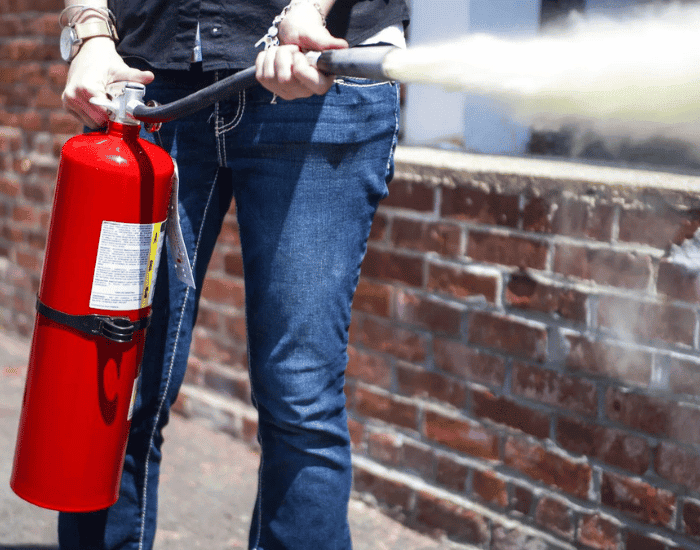
The Fire Protection Standard Everyone References
Selection, Installation, Maintenance, Inspection, and Testing of Portable Fire Extinguishers
Daniel Beauchesne, a Fire Marshal-licensed professional, breaks down NFPA 10 chapter by chapter so you understand what's actually required, not just what's recommended.
What Is NFPA 10 and Why Does It Matter?
Specifically, NFPA 10 is the Standard for Portable Fire Extinguishers. Published by the National Fire Protection Association (founded in 1896), it's the most authoritative guideline in the United States for how fire extinguishers should be selected, installed, maintained, inspected, and tested.
Moreover, NFPA doesn't have legal enforcement power, but every state fire code, OSHA standard, and local building code references NFPA 10. Your building inspector uses it. Your insurance company requires compliance with it. Your liability exposure depends on whether you're following it.
The current edition is NFPA 10-2022 (with the 2026 edition coming soon). If you're compliant with 2022, you're in good shape. But the standard evolves—new requirements for electronic monitoring, updated hazard classifications, clearer maintenance procedures.
NFPA 10 Chapter by Chapter
Additionally, NFPA 10 is organized into chapters. Here's what you actually need to know about each one.
Chapter 4: Listing and Labeling Requirements
Furthermore, Every fire extinguisher you buy must be UL listed (Underwriters Laboratories certified). This means it's been tested to perform as claimed.
Specifically, What you need to know: Every extinguisher must have a label showing:
- Type/class (A, B, C, D, K)
- Rating (2A:10B:C, etc.)
- Operating instructions in English and any other relevant language
- Hazard warnings (if applicable)
- First aid for exposure to extinguishing agent
- Instructions for inspection and maintenance
Importantly, Practical implication: If a label is faded, illegible, or missing, the extinguisher must be removed from service. Users must be able to read instructions in an emergency.
Chapter 5: Selection of Portable Fire Extinguishers
Moreover, This chapter tells you WHICH extinguisher to buy based on what could burn in your space. It's the backbone of fire safety planning.
In addition, Fire classes are defined here: Class A (ordinary combustibles), Class B (flammable liquids), Class C (electrical), Class D (combustible metals), Class K (cooking oils).
For example, Hazard levels are defined here: Light (low fire load), Ordinary (moderate), and Extra (high fire load). Your space gets classified based on what's stored/used there.
As a result, Practical implication: A warehouse full of paper products is "Ordinary Hazard." A data center is "Extra Hazard." An office is "Light Hazard." Each gets a different minimum extinguisher rating. Tables in Chapter 5 specify exactly which rating you need.
Chapter 6: Installation, Distribution, and Placement
In general, This is where the rules get specific about WHERE extinguishers go and how many you need.
Moreover, Maximum Travel Distance (Critical)
In fact, In commercial or industrial settings, fire extinguishers should be no more than 75 feet away from any point on the floor. This means the farthest person from an extinguisher must be able to reach one in seconds.
Mounting Height
Furthermore, For fire extinguishers under 40 lbs, the handle should not be more than 5 feet from the ground. Extinguishers more than 40 lbs should be no more than 3.5 feet from the ground. This ensures everyone (including shorter people) can reach and operate them.
Visibility Requirements
Notably, Extinguishers must be conspicuous, unobstructed, and clearly marked. In locations where visual obstructions cannot be avoided, signs or other means shall be provided to indicate the fire extinguisher location, located in close proximity to the extinguisher.
In summary, Practical implication: A 10,000 sq ft warehouse classified as Ordinary Hazard needs at least seven 2A-rated extinguishers placed so no point on the floor is more than 75 feet from one.
Chapter 7: Inspection and Maintenance
Consequently, This is the operational backbone. It specifies what checks happen when and who can do them.
Therefore, Monthly Visual Inspection (Section 7.2)
In practice, Visual inspections should be performed at least once every 30 days. These inspections verify that extinguishers are in their designated locations and properly mounted, there are no obstructions to visibility/access, the container has adequate pressure (between 185–195 PSI), and the fire extinguisher is full—confirmed by weighing or lifting.
For context, Who can do it: Any trained staff member. No certification required.
As a result, Annual Full Maintenance (Section 7.3)
In particular, A thorough examination and repair as needed. Extinguisher is disassembled, internally inspected, components tested, recharged if necessary.
Specifically, Who can do it: Only certified fire protection technicians. Most jurisdictions require NICET certification or equivalent state license.
Additionally, Practical implication: Every extinguisher gets a tag after annual maintenance showing the month/year of service. Overdue tags = compliance violation.
Chapter 8: Hydrostatic Testing and Pressure Testing
In addition, This chapter specifies WHEN and HOW often extinguishers need to be tested under extreme pressure to verify they won't fail or explode.
Also, Pressurized water, water mist, carbon dioxide and wet chemical (Class K) extinguishers require hydrostatic testing every 5 years. Dry chemical (ABC) requires testing every 12 years.
Similarly, Exception: Non-rechargeable stored pressure extinguishers (dry chemical) must be removed from service 12 years from the date of manufacture.
What Happens During Testing
The cylinder is filled with water and pressurized to test pressure (varies by type). Visual inspection for cracks, leaks, or deformation. If it passes, it's recertified with a tag. If it fails, it's condemned and destroyed.
Practical implication: A condemned cylinder cannot be repaired and shall be stamped "CONDEMNED" on the top, head, shoulder, or neck with a steel stamp. A condemned extinguisher must be replaced.
The Selection Tables That Actually Matter
NFPA 10 Tables 6.2.1.1 and 6.3.1.1 specify the minimum extinguisher rating and maximum floor area per unit for each occupancy hazard level. These tables are what your fire inspector uses.
Example: How to Read the Tables
You have a 10,000 sq ft warehouse classified as "Ordinary Hazard" (moderate fire load). Table 6.2.1.1 says you need a minimum of 2A rating and a maximum of 1,500 sq ft per extinguisher.
Calculation: 10,000 sq ft ÷ 1,500 sq ft per unit = 6.67 units. You need 7 extinguishers minimum, each rated 2A or higher.
Plus the 75-foot travel distance rule: Each extinguisher must be positioned so no point on the floor is more than 75 feet away.
Result: 7 extinguishers at strategic locations covering the 10,000 sq ft space with no point farther than 75 feet from one.
Most Common NFPA 10 Violations (What Gets You Cited)
Fire marshals and OSHA inspectors see the same violations over and over. Know these so you don't become a statistic.
🚫
Overdue Annual Maintenance
Most common violation. Annual service tag is overdue or missing. Extinguisher may be fully charged but the tag proves maintenance was done.
🚫
Blocked or Inaccessible
Extinguisher hidden in a cabinet, blocked by a pallet, or stored behind equipment. Violates the "easily accessible" requirement.
🚫
Wrong Type/Rating for Space
ABC extinguisher in a kitchen (should be Class K), or 1A extinguisher in a warehouse (should be 2A+ per table). Doesn't match hazard.
🚫
Insufficient Quantity
Too few extinguishers for the space size. Table says 7 needed, only 3 present. Violates minimum coverage.
🚫
Pressure Gauge Not in Green
Pressure reading is in yellow or red zone. Indicates leakage or discharge. Extinguisher unusable.
🚫
Illegible or Missing Labels
Label is faded, damaged, or gone. Users can't read operating instructions. Violates Chapter 4 requirements.
🚫
Overdue Hydrostatic Test
CO2 or water-based extinguisher due for 5-year hydrostatic test but test is overdue. Must be removed from service.
⚠️ Citation Costs:
OSHA fines for fire extinguisher violations range from $2,000 to $15,000+ per violation, depending on severity. A facility with 20 locations × overdue maintenance = $40,000+ in fines. Plus liability exposure if a fire occurs and you can't show compliance.
New: Electronic Monitoring Systems
In short, The 2022 edition of NFPA 10 clarified requirements for electronic monitoring systems. These are sensors attached to extinguishers that track pressure, location, and tamper status in real-time.
For example, What they do: Send alerts if pressure drops, if an extinguisher is moved, or if the tamper seal is broken. You get an immediate notification instead of waiting for the monthly inspection.
Are they required? No. But if you use them, they can replace or supplement monthly visual inspections. If you have electronic monitoring, you still need annual full maintenance and hydrostatic testing on schedule.
Practical value: High-security facilities (data centers, airports, healthcare) use electronic monitoring for accountability and real-time alerts. Smaller businesses stick with traditional monthly inspections—it's cheaper and simpler.
Fire Extinguisher Equipment & Compliance
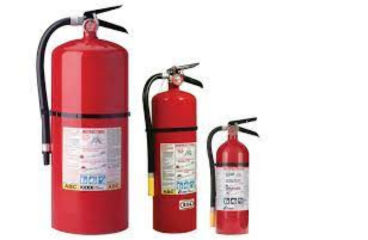
Properly mounted extinguisher at correct height and visible location
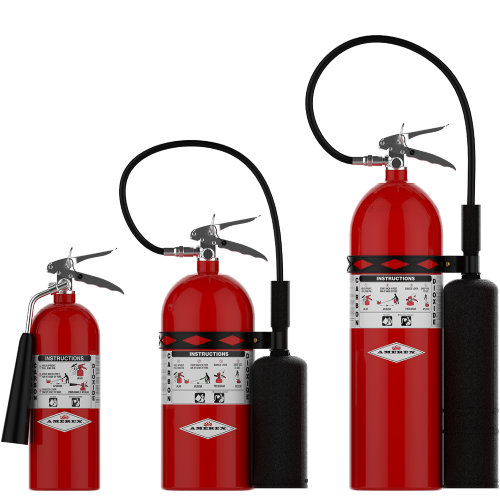
CO2 extinguisher for electronics and sensitive equipment
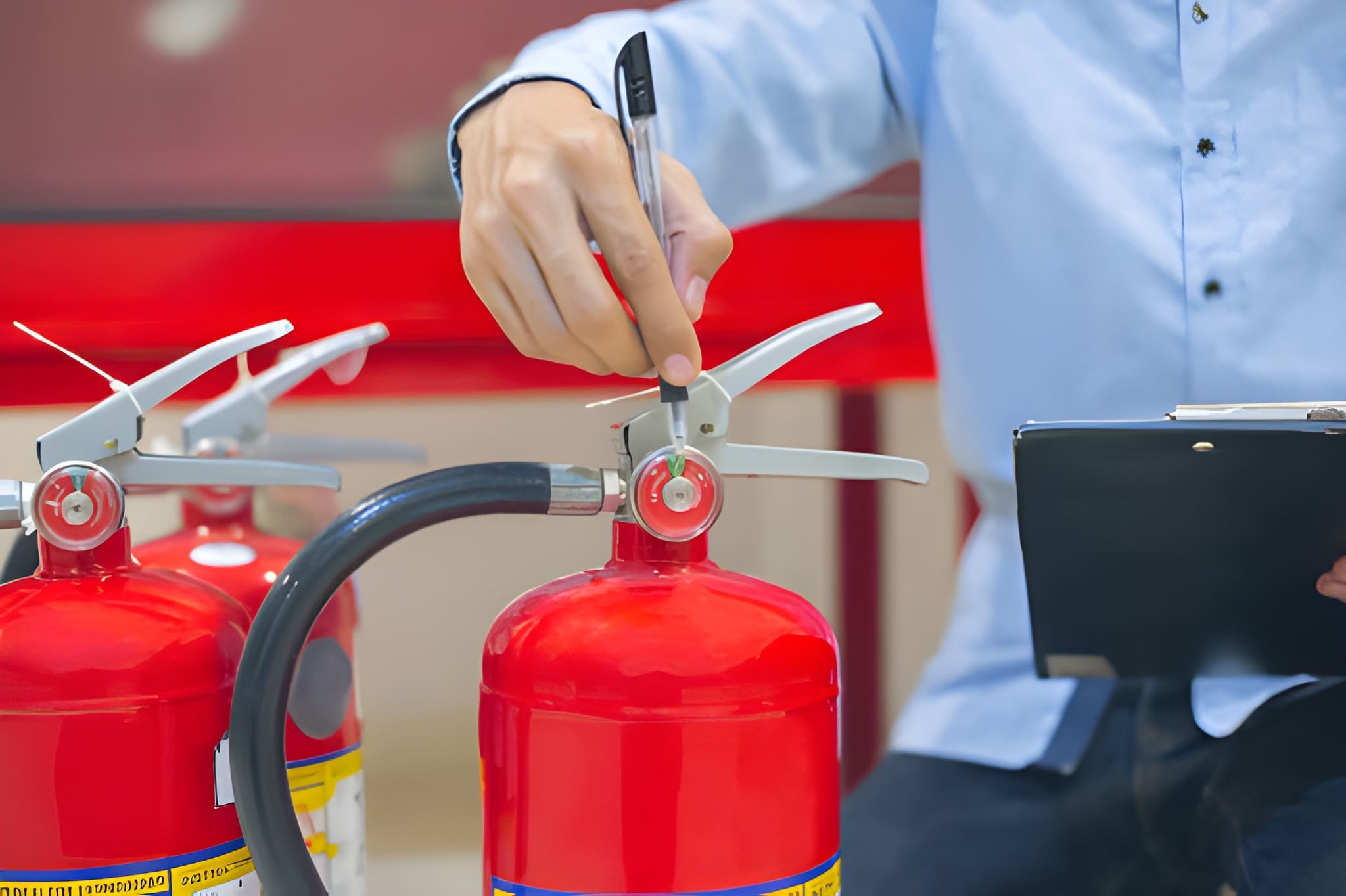
Professional recharging and recertification equipment
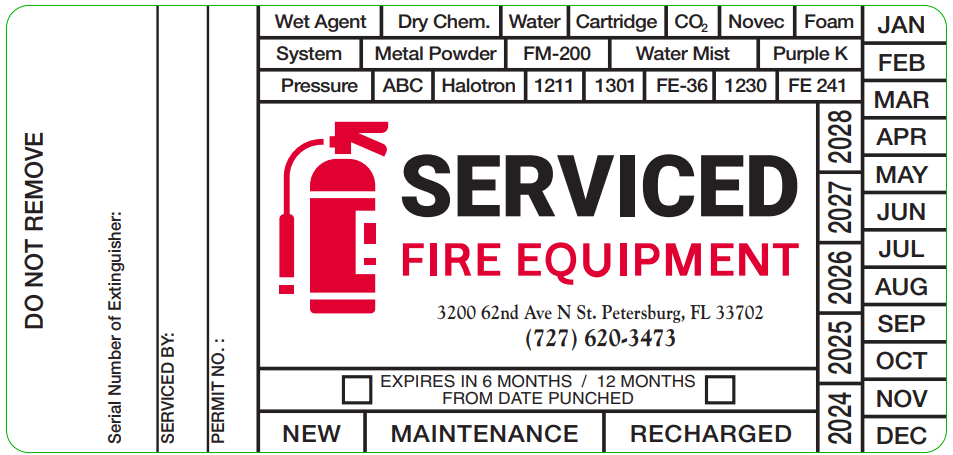
Annual service tags showing compliance records
NFPA 10 Compliance Inspection & Service
Daniel Beauchesne performs NFPA 10 compliance inspections throughout the Tampa Bay region. We help facilities understand what the standard requires, identify violations, and fix them before the fire marshal shows up.
Pinellas County
- St. Petersburg
- Clearwater
- Pinellas Park
- Seminole
- All Pinellas County
Hillsborough County
- Tampa
- Brandon
- Riverview
- Lakewood Ranch
- All Hillsborough County
Surrounding Areas
- Pasco County
- Sarasota County
- Service & Compliance
- National Wholesale
Is Your Facility NFPA 10 Compliant?
Daniel performs comprehensive NFPA 10 compliance audits. We identify violations, recommend corrections, and handle the annual maintenance and hydrostatic testing. Avoid costly OSHA fines. Stay compliant.
Related Guides
Additionally, NFPA 10 connects to every aspect of fire extinguisher compliance. Go deeper on what matters to you.
Compliance
The NFPA 10 Guide
Importantly, The full compliance guide — selection tables, citation patterns, and inspection records.
Maintenance
Maintenance Intervals
Furthermore, What NFPA 10 requires at 1 year, 6 years, and hydrostatic testing intervals.
Types
Extinguisher Types Explained
ABC, CO2, Class K, and clean agents — NFPA 10 Chapter 5 selection criteria applied.
Fire Classes
Fire Classes Explained
Class A, B, C, D, K — what burns, what doesn't, and which agent NFPA 10 mandates.
Florida Law
Florida Requirements
How Florida Statute 633 enforces NFPA 10 for every business in the state.
Buyer's Guide
How To Choose the Right One
Step-by-step decision guide — apply NFPA 10 to your specific space.