
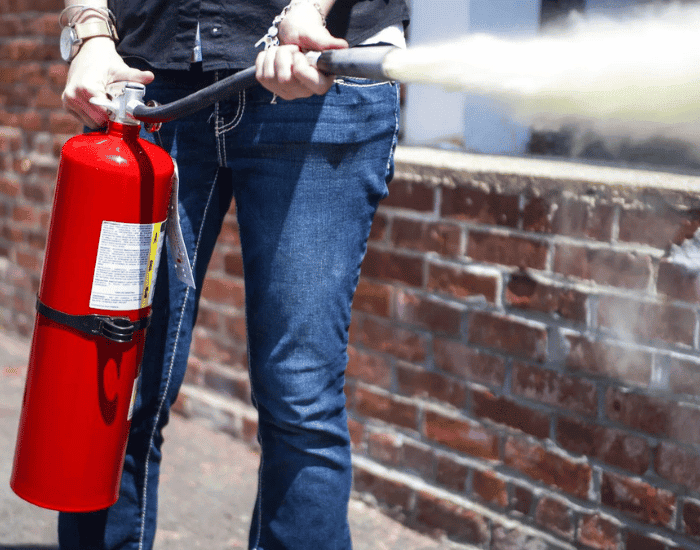
The Decision Guide Nobody Talks About
How to Choose the Right Fire Extinguisher
The Step-by-Step Guide to Picking the One That Actually Works for Your Space
Daniel Beauchesne has helped thousands of business owners and homeowners pick the right extinguisher. Most people buy wrong the first time. This guide walks you through exactly how to think about it so you don't.
Why Most People Pick the Wrong Extinguisher
A restaurant owner grabs an ABC extinguisher for the kitchen. A data center manager stocks CO2 everywhere without thinking about usage areas. A warehouse has Class A extinguishers in the flammable liquids storage. A boat owner uses ABC and destroys the electronics when a small fire starts.
They didn't pick wrong on purpose. They picked the cheapest option, or the most common option, or the one that was already there. They didn't think about what actually burns in their space, what agent actually works, or what happens after the fire is out.
This guide fixes that. By the end, you'll know exactly what to look for, what questions to ask, and how to walk into a fire protection company and get the right answer instead of the easy answer.
Step 1: Identify What Could Actually Burn in Your Space
Walk around your space and answer this question honestly: "What materials are here that could catch fire?" Don't think about probability. Think about what's actually present.
📋 In an Office or Retail Space
- Paper (everywhere)
- Wood (furniture, framing)
- Electrical equipment (wires, panels, computers)
- Plastic (cables, trim, storage)
- Trash and cardboard
Fire class: Class A + Class C
🔧 In a Garage or Auto Shop
- Gasoline and diesel fuel
- Oil and lubricants
- Solvents and chemicals
- Electrical equipment
- Vehicle parts and materials
Fire class: Class A + Class B + Class C
🍳 In a Restaurant or Kitchen
- Hot cooking oil and grease
- Electrical equipment
- Paper and cardboard (storage)
- Wood and materials (prep areas)
Fire class: Class K (required) + Class A
🚤 On a Boat or Yacht
- Fuel (gasoline or diesel)
- Oil and lubricants
- Electronics and wiring
- Fiberglass and materials
- Trash and stored items
Fire class: Class A + Class B + Class C (with electronics)
💡 The Key Insight:
Most spaces have multiple fire classes present. Your job isn't to pick one extinguisher type. It's to identify all the classes that could burn, then pick the right extinguisher(s) for the PRIMARY risk in your space.
Step 2: Understand the Rating System (Why 2A:10B:C Means Something)
On every extinguisher label, you'll see something like "2A:10B:C" or "1A:10B:C". This is the rating system. It tells you what fire classes it handles and HOW EFFECTIVELY it handles them.
What the Numbers Mean
The Letter (A, B, C, D, K)
Tells you what fire class it works on. A, B, C, D, or K. An extinguisher with just "B" doesn't work on Class A fires. An extinguisher with "ABC" works on all three.
The Number Before A (2A, 3A, 4A, etc.)
Measures effectiveness on Class A fires. Higher number = more effective. A 2A extinguisher is twice as effective on Class A fires as a 1A extinguisher. Think of it as: 1A extinguisher puts out fires in X amount of material. 2A puts out fires in 2X amount of material.
The Number Before B (10B, 20B, etc.)
Measures effectiveness on Class B fires. Higher number = more effective on larger liquid fires. A 20B extinguisher works on twice the area of flammable liquid as a 10B.
Examples You'll See
1A:10B:C
Small extinguisher. Good for small offices, vehicles. Handles small Class A/B/C fires. Not enough for a warehouse.
3A:40B:C
Medium extinguisher. Standard for offices, retail, most commercial buildings. Balanced coverage.
4A:60B:C
Large extinguisher. Better for warehouses, larger commercial spaces. More effective, but heavier.
K (for Class K)
Class K wet chemical. Size varies. Only rating is the class. Required for commercial kitchens.
Rule of thumb: Bigger isn't always better. A 4A:60B:C is more effective but harder to handle and more expensive. For most small to medium businesses, 2A:10B:C or 3A:40B:C is right. For kitchens, ANY Class K extinguisher works if it's code-compliant and accessible.
Step 3: Match Your Space to the Right Extinguisher Type
Now you know what can burn and you understand the rating system. Time to pick the actual extinguisher type. This is where most people mess up because they don't think about what happens AFTER the fire is out.
Office, Retail, Warehouse (General Commercial)
Pick: ABC Multipurpose Powder (2A:10B:C or 3A:40B:C)
Why: ABC covers Class A (paper, wood), Class B (if there's any flammable liquid storage), and Class C (electrical equipment). One extinguisher handles 95% of potential fires in a typical office or retail space.
Downside: Powder residue. After discharge, you'll have powder everywhere. But the fire stops immediately and it's the most cost-effective option for general use.
How many: One extinguisher per 2,500-3,500 square feet (NFPA 10 requirements). Place them on main exit routes so people can grab them without going toward the fire.
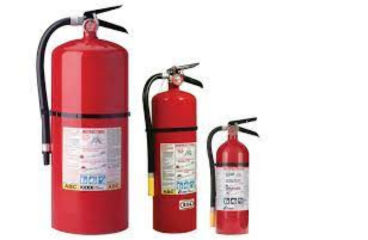
ABC multipurpose extinguisher
Restaurant or Commercial Kitchen
Pick: Class K Wet Chemical (Required by Code)
Why: Cooking oil fires are violent and dangerous. Class K is the ONLY safe extinguisher for hot cooking oil. Water causes explosions. ABC doesn't cool the oil enough. Class K is code-required, not optional.
Placement: One Class K extinguisher within 30 feet of each fryer or deep fryer. Also mount a Class A/B extinguisher (ABC) nearby for other kitchen fires.
Critical: Staff training is essential. Everyone must know that Class K comes FIRST for oil fires, ABC for everything else.
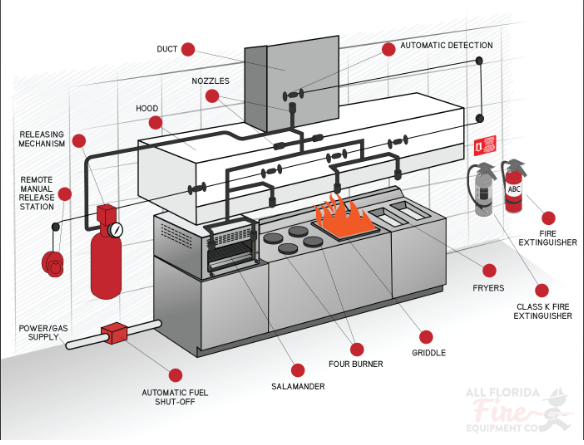
Code-required for hot oil
Data Center, Server Room, or Electronics Area
Pick: CO2, Halotron, Cleanguard, or Halon (Non-Residue Agent)
Why: ABC powder residue conducts electricity and destroys sensitive equipment. Powder on circuit boards = expensive replacement. You need a non-conductive, non-residue agent that extinguishes the fire without damaging what you're protecting.
Options by preference: Halon (best, most expensive), Cleanguard (almost as good, more affordable), Halotron (practical balance), CO2 (cheapest, harder to handle).
Tip: If your space has automatic suppression systems (like FM-200), still keep a handheld CO2 or Halotron as backup for small fires.
CO2 extinguisher for electronics
Boat, Yacht, or Vehicle Engine Compartment
Pick: Halon, Cleanguard, or Halotron (Non-Residue)
Why: Engine compartments have fuel, oil, AND electronics. ABC powder residue + salt water + tight spaces = corrosion and equipment failure. You need a clean agent that extinguishes without leaving conductive residue.
Halon is the first choice (most effective, most reliable), but Cleanguard or Halotron work and are more affordable. CO2 can work but is harder to aim in confined spaces and blows away on boats with air flow.
Critical: For boats in salt water environments, non-residue agents are essential. ABC powder + salt air = rapid corrosion.
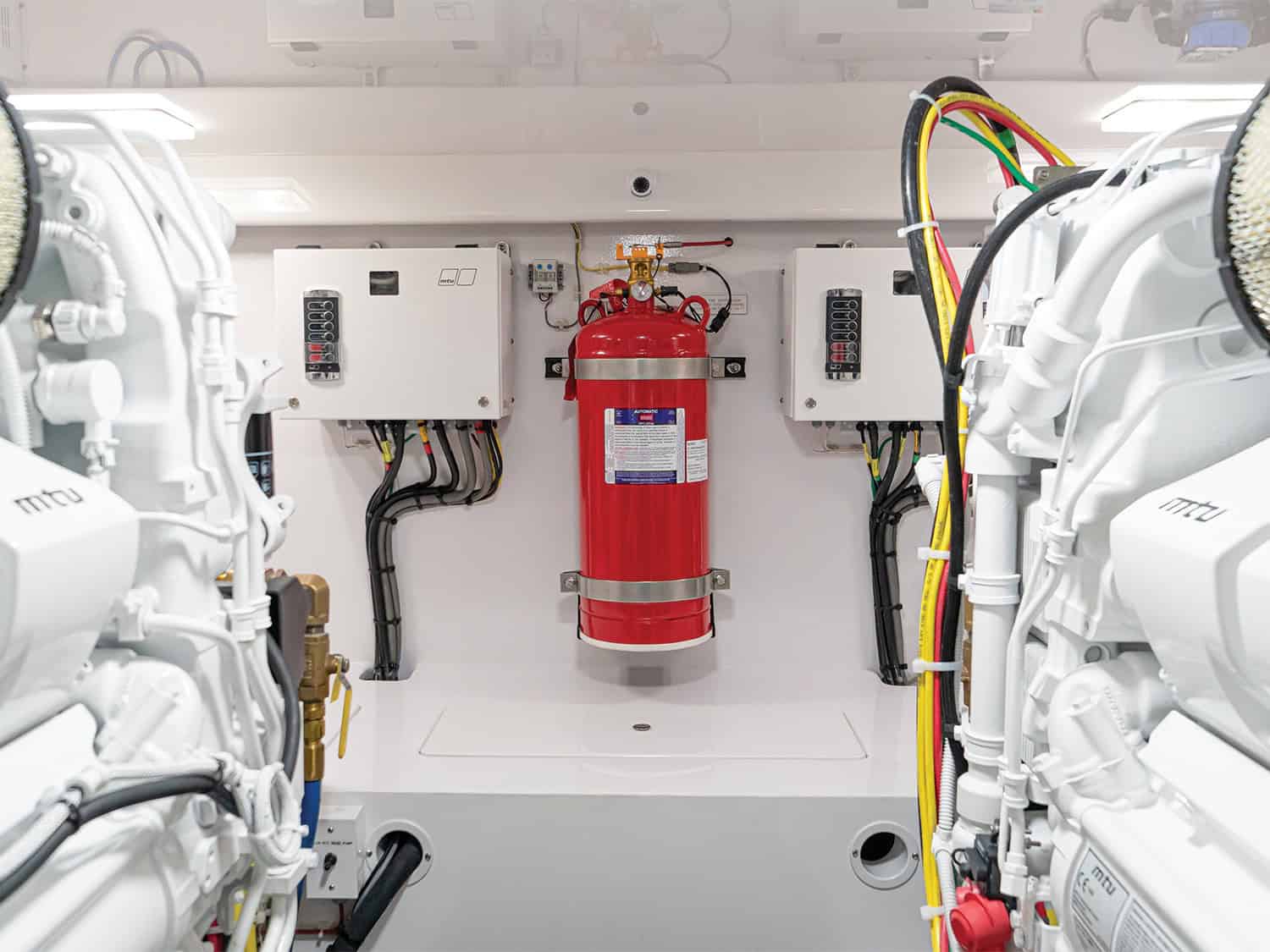
Halon for boats and engines
Garage, Auto Shop, or Flammable Liquid Storage
Pick: ABC Multipurpose + Foam (or BC Dry Powder)
Why: You have Class A (tools, materials), Class B (fuel, oil), and Class C (electrical). ABC handles all three. But if a large gasoline spill catches fire, ABC powder is less effective than foam. Consider stocking both.
Alternately, BC dry powder works on Class B and C specifically. Stock ABC for general use and BC for fuel storage areas.
How many: At least one ABC extinguisher per 2,500 sq ft, plus one larger extinguisher (or foam) near fuel storage. Keep spill kits and sand nearby too.
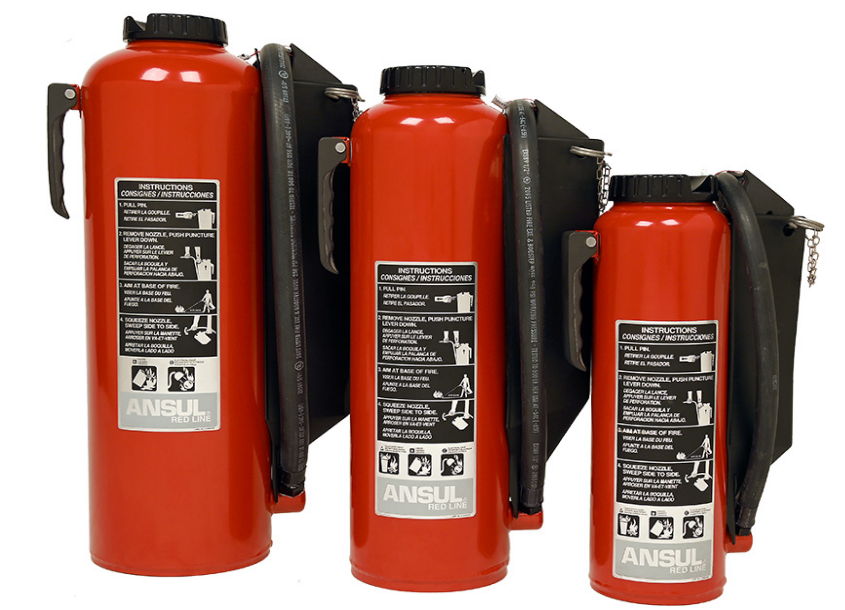
Multiple types for mixed fire classes
Step 4: Get the Right Size and Place It Where People Can Actually Use It
Having an extinguisher in a locked cabinet in the back room is useless. It has to be accessible, visible, and the right size for the job.
Sizing by Space
Small Space (Home, Small Office)
5-10 lb ABC extinguisher. Light enough to handle. 1-2 minutes of discharge time. Good for small fires. Limited coverage but accessible.
Medium Space (Retail, Small Warehouse)
20-30 lb ABC extinguisher. Heavier, but more effective. 2-4 minutes discharge. One per 2,500 sq ft minimum.
Large Space (Warehouse, Manufacturing)
30-50 lb extinguishers or cartridge-operated systems. Maximum coverage and discharge time. Mount on wheels if extremely heavy.
Kitchen (Class K)
2-3 lb Class K extinguishers. Smaller, mounted near fryers. Light enough for anyone to grab. Multiple units if multiple cooking areas.
Placement Rules (NFPA 10)
- Visible and accessible: Don't hide them. Mount on walls at eye level or slightly above. Use red color and signage so people can find them in smoke.
- Near exits: Place them on main exit routes so people can grab them without heading toward the fire. Never block an exit with an extinguisher.
- Distance from hazards: For Class A fires, one extinguisher per 2,500-3,500 sq ft. For Class B hazards, one per 2,500 sq ft. Kitchen has Class K within 30 feet of each fryer.
- Height: Mount between 3.5 and 5 feet off the ground so anyone (including shorter people) can reach it.
- Not in cabinets or locked areas: If people have to search for it, they won't use it. Seconds matter in a fire.
Step 5: Budget Smart (Cost vs. Effectiveness)
Picking the cheapest extinguisher is how you end up with the wrong one. But overspending doesn't make sense either. Here's how to think about cost.
💰 Budget Option
ABC powder, new 5-10 lb: $30-60 per unit
Best for: Small offices, homes, vehicles. Gets the job done. Residue is a problem but manageable in small spaces.
💵 Smart Option
ABC powder, new 20 lb: $80-150 per unit
Best for: Most commercial spaces. More coverage, better effectiveness. Cost per sq ft protected is lower.
💎 Right Tool
Halotron, CO2, Class K: $150-400+ per unit
Best for: Electronics, kitchens, boats. Higher cost but saves equipment damage. Often required by code.
💡 Real Math:
An ABC extinguisher for a data center might cost $150. One fire that destroys a $50,000 server = cost of 333 extinguishers. A non-residue agent that costs $300 suddenly looks like the best investment you'll ever make. Don't cheap out on the fire tool. Cheap out on stuff that doesn't matter in an emergency.
Get the Right Extinguisher for Your Space
Daniel Beauchesne and Serviced Fire Equipment stock every type of extinguisher mentioned in this guide. Same-day walk-in consultation. We'll ask you the right questions about your space and help you pick exactly what you need—not what's cheap, but what actually works.
Pinellas County
Hillsborough County
Surrounding Areas & Services
Ready to Pick the Right Extinguisher?
Daniel talks you through your space and recommends exactly what you need. No guessing. No overspending. No wrong picks. Same-day walk-in, no appointment needed.
Dig Deeper — Before You Decide
The right choice becomes obvious once you understand the categories. These guides do that.
Types
All Types Explained
ABC, BC, CO2, Class K, Halon, Cleanguard, Halotron — every type with real-world use cases.
Fire Classes
Fire Classes Explained
The class of fire in your space determines the extinguisher. Start here.
Clean Agents
Halon vs Halotron vs Cleanguard
Electronics, boats, and server rooms need clean agents. Here's how they compare.
Florida Law
Florida Requirements
Florida businesses: know what the law requires before you buy.
NFPA 10
NFPA Standard Explained
The federal standard behind every selection and placement decision you make.
After You Buy
Maintenance Intervals
Once you have the right unit, here's how to keep it compliant and serviceable.
