A vessel engine room fire suppression system is your boat’s most critical passive safety system. The one that activates automatically to fight a fire in the most dangerous part of your vessel without requiring a crew member to be present or manually deploy an extinguisher. Engine room fires are among the most devastating events that can occur aboard a vessel: the concentration of fuel, lubricants, hot machinery, and electrical systems creates fires that spread rapidly in confined spaces, and the inability to easily access an engine room during a fire makes manual suppression dangerous or impossible.
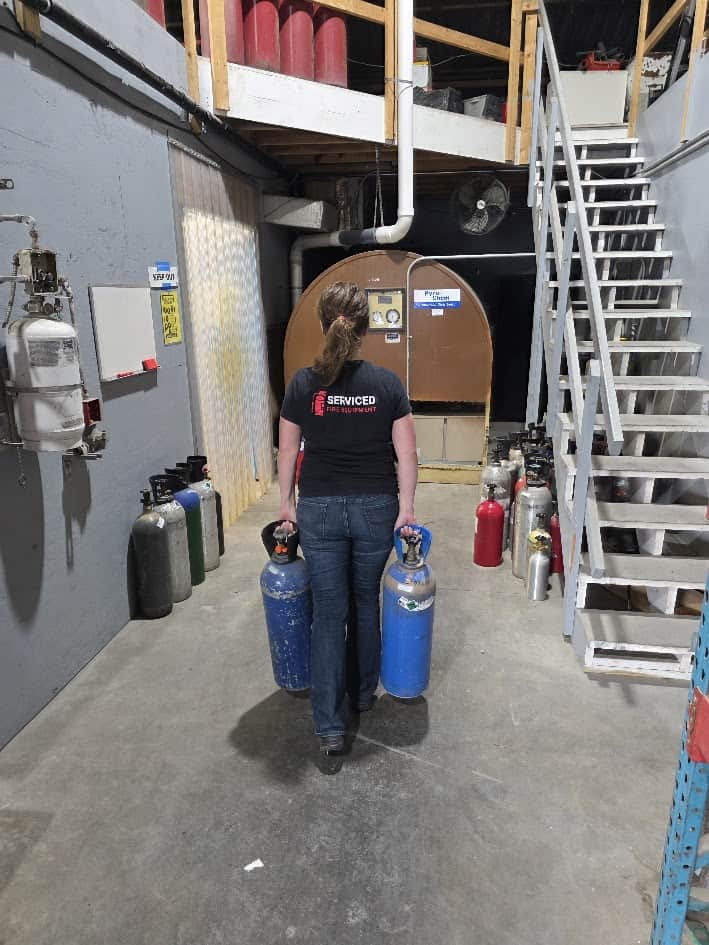
The fire suppression cylinder at the heart of that system needs to be recharged to remain functional. Whether your system activated during an actual fire, discharged inadvertently during a maintenance error, or has reached the end of its cylinder recharging interval without activation, getting the cylinder recharged properly is essential before the vessel returns to service. Serviced Fire Equipment is an authorized recharging facility for Sea-Fire and Kidde marine engine room suppression systems, providing in-house recharging at our St. Petersburg facility.
How Marine Engine Room Suppression Systems Work
Modern marine engine room fire suppression systems use clean agent suppression. Typically FK-5-1-12 (also known as Novec 1230 or Cleanguard). To suppress fires quickly without damaging the engine, electronics, or other equipment. The system consists of one or more pressurized cylinders containing the liquid clean agent, a detection system (usually heat or smoke detectors), a control panel, and a piping system with discharge nozzles positioned throughout the engine room.
When a fire is detected, the control panel signals the cylinder valve to open. The liquid agent vaporizes rapidly as it’s discharged through the piping and nozzles, flooding the engine room with clean agent vapor that suppresses combustion by absorbing heat and interrupting the chemical chain reaction of the fire. The entire discharge typically occurs in 10 seconds or less. Suppressing the fire before it can grow beyond the suppression system’s capacity.
Clean agent systems are preferred for engine rooms over CO₂ systems for several reasons: clean agents are safer for any crew members who might be in or near the engine room during activation; clean agents leave no residue that would require extensive cleanup of the engine and electronics. Clean agents are effective at the lower concentrations achievable in the engine room volume, making them efficient and reliable.
After activation. Whether for a real fire or for any other reason. The cylinder is empty and the system provides no suppression capability until the cylinder is recharged. Operating a vessel without a functional engine room suppression system is both dangerous and potentially non-compliant with USCG regulations for commercial vessels.
Recharging Intervals: When Does Your Cylinder Need Service?
Marine engine room suppression cylinders need recharging in several situations:
After Activation: Any activation. Fire suppression, accidental discharge, maintenance error, or testing discharge. Empties the cylinder. The system must be recharged before the vessel returns to service.
Manufacturer-Specified Periodic Recharging: Sea-Fire and other manufacturers specify periodic recharging intervals even for cylinders that have never been activated. This is because the pressurizing agent (typically nitrogen) can slowly leak through valve seals over time, reducing the pressure that drives the clean agent out when activated. Most manufacturers recommend recharging every 3-5 years regardless of activation history. Check your specific system’s manual for the manufacturer-specified interval.
USCG Inspection Requirements: Commercial vessels inspected by the US Coast Guard must demonstrate that fire suppression systems are functional. An expired or insufficiently pressurized cylinder will fail a USCG inspection. For commercial fishing vessels, charter boats, passenger vessels, and other USCG-regulated vessels in Florida, compliance with suppression system maintenance requirements is mandatory.
Annual System Inspection: Annual inspection by an authorized service technician includes verifying cylinder pressure (weighing the cylinder to confirm no agent loss and checking the pressure gauge), inspecting all nozzles and piping for corrosion or blockage, testing the detection system and control panel, and verifying the manual activation mechanism. This inspection may identify cylinders that need recharging even if no activation has occurred.
Authorized Recharging: Why It Matters
Marine suppression system cylinders must be recharged by an authorized service center. Sea-Fire, Fireboy-Xintex, Kidde, and other manufacturers require that recharging be performed by authorized dealers using factory-specified agents and procedures. Unauthorized recharging. Using the wrong agent, wrong pressure, or improper valve procedures. Creates a system that appears functional but may fail to suppress an actual fire, or may discharge improperly during activation.
This is why The agent used matters specifically. FK-5-1-12 (the agent used in many modern systems) must be recharged with the correct formulation at the correct concentration. Using a different agent. Even another clean agent with similar properties. Violates the system’s fire suppression performance listing and may cause the system to fail the specific fire suppression test it was listed to pass. The UL listing of a marine suppression system applies to the specific agent, concentration, cylinder, and nozzle configuration tested together. Changing any component changes the listed performance.
On top of that, Serviced Fire Equipment is a factory-authorized recharging facility for Sea-Fire marine suppression systems, and we recharge Kidde marine systems as well. Our technicians are trained on the specific procedures for each system, we stock the correct agents, and we use calibrated weighing and pressure verification equipment to confirm each recharged cylinder meets manufacturer specifications. Learn more about our Sea-Fire service capabilities and our Fireboy-Xintex service.
The Recharging Process at Serviced Fire Equipment
When you bring your marine suppression system cylinder to our St. Petersburg facility for recharging, the process includes:
First, cylinder inspection. The cylinder exterior is inspected for corrosion, damage, or physical issues that could affect safe recharging or system function. The valve assembly is inspected for damage or wear. Any cylinder with serious physical issues may need to be replaced rather than recharged. We’ll advise on this clearly before proceeding.
Recharging Your Fire Extinguisher
Second, complete emptying and vent. If any residual agent or pressure remains, the cylinder is safely vented per manufacturer procedures before recharging begins. We don’t “top off” partially discharged cylinders. We start fresh with the correct agent quantity.
Third, clean agent fill. The cylinder is filled with the specified clean agent (FK-5-1-12 for most modern systems) to the exact weight specified by the manufacturer for that cylinder model. Agent fill is measured by weight on calibrated scales to ensure precise quantity. Too little agent results in insufficient concentration for fire suppression; too much creates excessive pressure that can trigger the pressure relief valve.
Fourth, nitrogen pressurization. After filling with liquid agent, the cylinder is pressurized with dry nitrogen to the manufacturer-specified operating pressure. This nitrogen provides the propellant force that drives the liquid agent out through the piping when the valve opens during activation.
In particular, Fifth, weight and pressure verification. The recharged cylinder is weighed and the final weight compared to the manufacturer’s specification for a full charge. Pressure is verified at the gauge. Both measurements must be within the manufacturer’s tolerance before the cylinder is released for service.
Sixth, documentation. We provide service documentation that includes the recharge date, cylinder serial number, agent type and quantity, final pressure reading, and our technician’s credentials. This documentation supports compliance with USCG inspection requirements and the annual inspection records your vessel should maintain.
Serving Boaters Throughout Florida’s West Coast
In most cases, Florida’s west coast boating community. From Tampa Bay marinas to Gulf Coast fishing operations to the Intracoastal waterway. Depends on marine fire safety equipment. Serviced Fire Equipment’s location in St. Petersburg puts us at the center of one of Florida’s most active boating regions, making us the convenient service destination for vessel owners and marina operators throughout the area.
Our marine customers come from St. Petersburg marinas, Tampa Bay, Clearwater Beach, Dunedin Causeway, and marina facilities throughout Pinellas and Hillsborough Counties. We also serve commercial fishing vessels, charter operations, and yacht brokerages throughout the Tampa Bay area. For vessels too large or too distant for convenient transport to our facility, contact us to discuss on-site service options for larger commercial vessels.
In addition to engine room suppression system recharging, we provide portable marine fire extinguisher service. Inspection, recharging, and replacement of handheld extinguishers required aboard vessels by USCG regulations. See our complete marine fire system services or contact us to schedule recharging for your vessel’s suppression system.
Need marine or vessel fire system cylinders serviced?
We recharge and service marine suppression system cylinders. Walk in or call for availability.
(727) 620-3473 — Marine Cylinder Service3200 62nd Ave N, St. Petersburg, FL · Mon–Fri 8am–4pm
Marine Fire System Resources
Marine Fire System Recharge & Hydrostatic Testing
Factory-trained for Fireboy, Sea-Fire, and Kidde systems. In-house cylinder recharging, drop-ship nationwide, ABS approved.
CALL (727) 620-3473 — MARINE FIRE SYSTEMSABS Approved · St. Petersburg, FL · Drop-Ship Nationwide · USCG Compliant