For fire equipment dealers, refurbished fire extinguishers represent one of the most profitable inventory categories — when sourced correctly. The margin potential on a properly reconditioned, certified refurbished extinguisher often exceeds new unit margins because the reconditioning cost is substantially lower than manufacturing cost, while the retail value remains comparable to new when properly positioned and documented. But sourcing refurbished extinguishers requires navigating a supply chain that has significant quality variation, regulatory complexity, and certification requirements that make the source of supply critically important.
Additionally, this guide is written specifically for fire equipment dealers — independent dealers, regional distributors, and fire safety companies looking to add or expand their refurbished extinguisher inventory. It covers the complete sourcing landscape, quality and certification requirements, the wholesale supply relationship that enables scalable refurbished inventory, and how Serviced Fire Equipment’s dealer program serves dealerships from Florida to the East Coast and beyond.
Why Refurbished Fire Extinguishers Are Valuable Dealer Inventory
Furthermore, the refurbished fire extinguisher market exists because fire extinguisher cylinders have extraordinarily long service lives when properly maintained. A steel cylinder manufactured in the 1990s can still be in compliant service today if it has passed hydrostatic testing and been properly reconditioned. The practical value embedded in that cylinder — the metal, the valve, the siphon tube, the mounting hardware — doesn’t depreciate the way most products do. Reconditioning restores the unit to like-new performance at a fraction of new manufacturing cost.
Worth noting, for dealers, this translates to a product category where the purchase cost is substantially lower than new but the selling proposition to end customers remains compelling. A properly reconditioned, Florida State Fire Marshal-certified refurbished 10 lb ABC extinguisher can sell at 60-80% of the new equivalent price while representing a substantially lower cost-of-goods. Dealers who can consistently source certified refurbished units at reliable quality have a competitive advantage in price-sensitive segments of the market — construction contractors, property managers with large portfolios, educational institutions, and other customers managing fire equipment at scale.
The Critical Distinction: Certified vs. Uncertified Refurbished
The refurbished extinguisher market continues to face serious quality concerns at the lower end. Many units are simply cleaned and repainted without undergoing proper internal inspections, seal replacements, or pressure testing. In some cases, they are also sold without legitimate certification documentation, raising concerns about reliability and safety. These units look like properly refurbished extinguishers from the outside. They carry service tags that may appear legitimate but were filled in by an unlicensed person without the required State Fire Marshal certification. And they may fail to function — or fail dangerously — when someone actually needs them.
Dealers who knowingly sell uncertified “refurbished” extinguishers expose themselves to significant liability when those units fail. They also risk their dealer license in Florida, where the State Fire Marshal takes the certification requirement seriously. Most importantly, uncertified units endanger the end users who depend on them.
Certified refurbished extinguishers from Serviced Fire Equipment undergo a complete reconditioning process performed by licensed technicians. This process includes full disassembly, internal cylinder inspection, replacement of seals and O-rings, fresh agent refill, reassembly and pressurization to manufacturer specifications, pressure leak testing, and application of a current service tag displaying our State Fire Marshal license number. Each unit is individually documented. Dealers who stock our certified units can confidently represent them to customers as fully compliant and fully functional.
Building a Refurbished Extinguisher Supply Chain
What’s more, sourcing refurbished extinguishers for dealer inventory requires a supply chain that provides consistent quality and certification; appropriate inventory breadth (common sizes and types), reliable availability and lead times. Competitive pricing that supports dealer margin and proper documentation for compliance purposes.
The primary supply sources for refurbished extinguishers are:
Licensed Fire Equipment Dealers with Reconditioning Capability: Dealers who perform their own reconditioning like Serviced Fire Equipment, can supply certified refurbished units directly. These are typically the best-quality source because the reconditioning is done in-house by licensed technicians under the dealer’s own quality control. Pricing is competitive because there are no intermediary margins. The challenge is finding dealers with significant reconditioning capacity who actively supply to other dealers wholesale rather than selling only at retail.
Manufacturer Authorized Rebuilders: Certain authorized service centers can recondition and recertify major brands. These sources typically provide the strongest brand-backed certification documentation and are appropriate for dealers who want to market units by brand name.
Surplus and Salvage Channels: Some dealers source raw material — uncertified used extinguishers — from surplus auctions, demolition sales, or business liquidations, then perform their own reconditioning. This requires the dealer to have in-house reconditioning capability and licensed technicians on staff. The economics can be very favorable but require significant upfront investment in equipment and personnel.
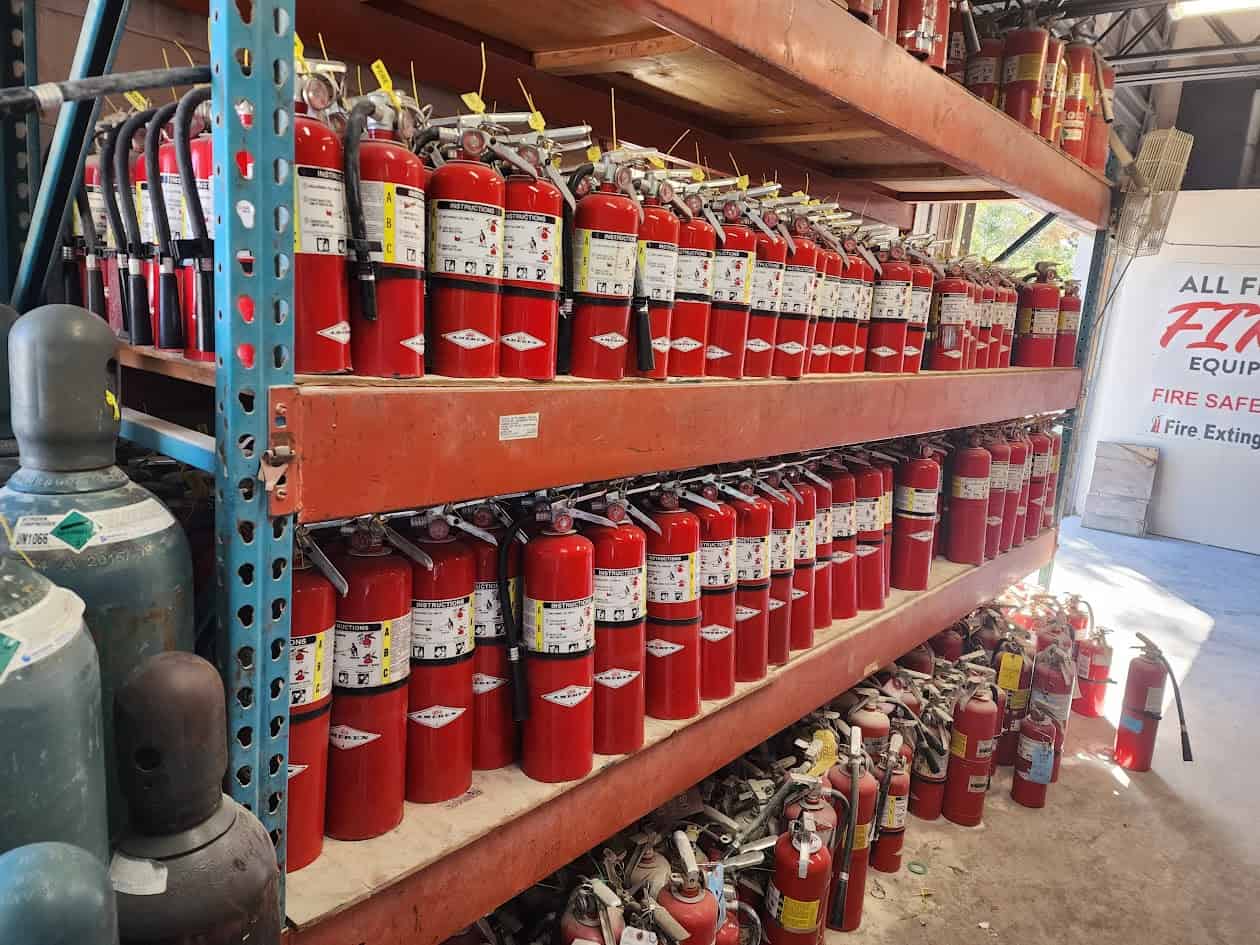
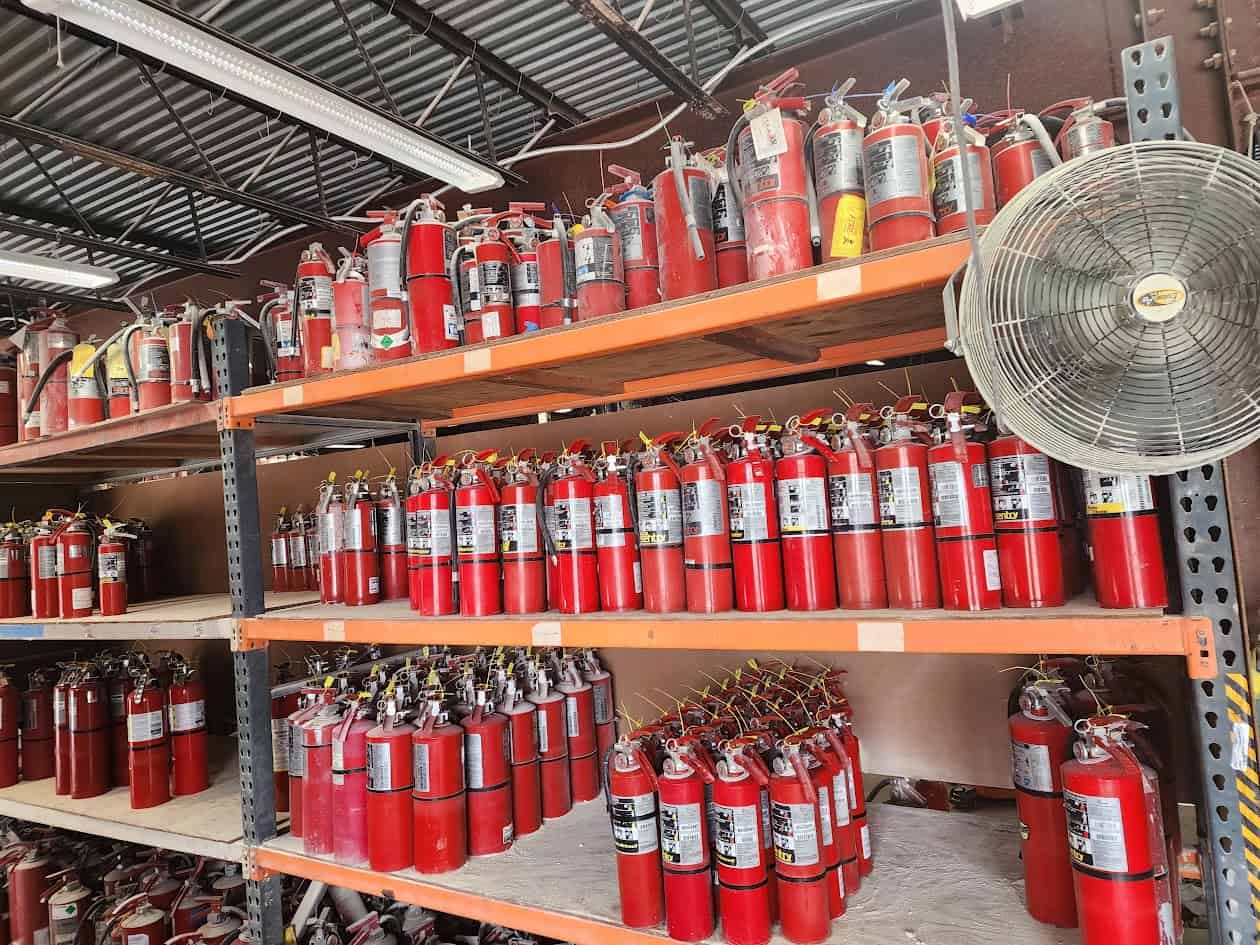
Beyond this, Serviced Fire Equipment’s wholesale dealer program provides the first source of certified refurbished inventory — from our own reconditioning operation — to dealers throughout Florida and the East Coast. Our program includes a fully stocked inventory of common extinguisher types and sizes ready for immediate delivery, flexible order quantities without excessive minimum requirements, dealer-friendly pricing designed to support resale margins, and complete certification documentation for every unit. Learn about our dealer supply program.
Inventory Categories: What to Stock and Why
A practical refurbished extinguisher inventory for a fire equipment dealer should be anchored around the high-volume categories: 2.5 lb ABC, 5 lb ABC, and 10 lb ABC units represent the majority of commercial market demand. These sizes cover the NFPA 10 minimum requirements for light-hazard (2-A:10-B:C) and ordinary-hazard (4-A:60-B:C) occupancies that constitute most commercial customers. Having consistent availability of these three sizes satisfies the majority of dealer customer needs.
Beyond the ABC core, specialty categories add significant value, such as CO₂ extinguishers (5 lb and 10 lb) for electronics-sensitive environments, Class K extinguishers for restaurant and food service customers, and wheeled extinguisher units for industrial and construction customers. Specialty units typically have higher per-unit margins than standard ABC units and are less price-competitive because fewer dealers stock them.
On top of that, Serviced Fire Equipment maintains inventory across all these categories with the ability to supply dealers throughout Florida and ship to the East Coast. For dealers in North Carolina and other East Coast markets without strong local refurbished supply, our shipping capabilities provide access to certified inventory that may not be available locally at comparable quality and pricing.
Dropshipping for Dealers Without Warehouse Space
Not every fire equipment dealer has warehouse space for fire extinguisher inventory. Small and independent dealers, particularly those focused on service rather than supply, may prefer a dropship model where customer orders are fulfilled directly from our facility under the dealer’s branding. This eliminates the working capital commitment of carrying inventory while maintaining the ability to offer refurbished extinguishers as a product line.
Our dropshipping program allows dealers to sell our certified refurbished inventory, collect payment from their customers, and pass orders to Serviced Fire Equipment for direct fulfillment. We ship under plain or dealer-branded packaging to the end customer. This model works particularly well for online fire equipment retailers and dealers who operate primarily through service contracts rather than storefront retail.
Explore our wholesale supply options or contact us directly to discuss a dealer arrangement tailored to your business model. Our team works with dealers of all sizes, from single-person operations to regional distributors, to build supply relationships that work for their specific needs.
Certification and Documentation for Dealer Sales
When you sell a certified refurbished extinguisher to a business customer, that customer needs documentation that satisfies their compliance requirements — primarily the service tag that Florida (and other state) fire codes require. Serviced Fire Equipment’s certified refurbished units come with current service tags from our licensed technicians, including our State Fire Marshal dealer license number, the inspection date, and the technician’s name. These tags are legally compliant for the commercial customers your business serves.
In particular, Dealers who sell to customers in Florida, Georgia, North Carolina, Virginia, and other states where annual professional inspection by a licensed dealer is required should verify that their supplier’s documentation meets those state requirements. Our tags satisfy Florida requirements; for customers in other states, verify the specific requirements for that jurisdiction.
Pricing Your Refurbished Inventory Competitively
Pricing certified refurbished extinguishers for retail through a dealership requires understanding both your cost basis and your customer’s price sensitivity. Refurbished extinguishers compete with new units — and the price advantage of refurbished is the primary sales driver. Customers who understand that a certified refurbished unit performs identically to a new one will pay a premium over uncertified alternatives, but they expect a meaningful discount from new pricing.
In most cases, A typical dealer pricing structure positions certified refurbished units at 60-75% of equivalent new retail price, generating margin from the spread between wholesale cost and retail price. For volume customers — contractors, property managers, large facilities — bundle pricing or service contracts that include the extinguisher supply along with ongoing maintenance service maximize long-term customer value and revenue stability.
Serviced Fire Equipment’s wholesale pricing to dealers is designed to support this margin structure. We don’t undercut our dealers to retail — our wholesale supply business serves dealers, not their customers directly. This relationship clarity lets dealers build their market position with our supply backing their inventory needs. Contact us to discuss dealer pricing.
Open a Dealer Account — Refurbished Units, Pallet Quantities
Fully serviced, field-ready refurbished extinguishers shipped nationwide. Dealer pricing, no middleman. Florida-licensed since 1999.
CALL (727) 620-3473 — DEALER INQUIRY3200 62nd Ave N, St. Petersburg, FL · Ships Nationwide · Pallet Quantities