Additionally, Fire Extinguisher Decision Guide
Fire Extinguisher Recharge vs Replacement
Furthermore, When recharging makes sense, when replacement is the right call, what drives the cost difference, and the third option most people don't know about — refurbished units.
Specifically, By Daniel Beauchesne, Florida State Fire Marshal Licensed Technician · License #EF-0001479 · Class 01 & 04 · 25+ Years
The Short Answer
Moreover, Recharge restores an existing extinguisher to full service condition — new agent, new seal, certified for another cycle. For instance, It makes sense when the cylinder is in good condition, within its service life, and the recharge cost is significantly less than replacement. For most rechargeable extinguishers in serviceable condition, recharging is the right financial and environmental choice.
Importantly, Replacement makes sense when a cylinder fails inspection, has reached the end of its service life, is non-rechargeable by design, or when the economics of recharging an old unit no longer make sense versus putting that money toward a new or refurbished unit with a fresh service timeline.
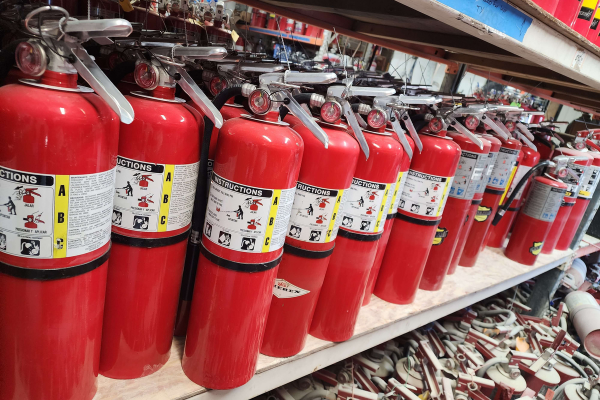
In general, There is also a third option that most people overlook: refurbished extinguishers — fully reconditioned, recharged, and certified units at a fraction of new unit cost. As a result, For businesses replacing multiple units at once, refurbished is often the most cost-effective path.
Recharge
Good cylinder, needs new agent. Restore to service and reset the service clock. Most cost-effective for units in good condition.
Replace New
Failed inspection, end of service life, or non-rechargeable. Full manufacturer warranty and fresh 12-year service timeline.
Replace Refurbished
Fully reconditioned, recharged, and certified. Fraction of new unit cost. Best value when replacing multiple units.
When Recharging Is the Right Call
In addition, Recharging makes sense when the cylinder itself has good years left in it and the cost of restoring the agent is substantially less than replacing the unit. For example, Here are the specific situations where recharge is clearly the right choice.
After any discharge — even partial
Notably, Any extinguisher that has been discharged — whether in an actual fire, accidentally, or during testing — must be recharged before it can be returned to service. Similarly, Under NFPA 10 and OSHA 1910.157, a discharged unit on the wall is not a compliant extinguisher regardless of how much agent remains. This applies even if the unit was discharged for just a second. If the cylinder is in otherwise good condition, recharge is virtually always the right move here.
6-year internal maintenance
In fact, The 6-year internal maintenance required by NFPA 10 includes a complete recharge as part of the service. In practice, The agent is removed, the cylinder is internally inspected, and fresh agent is added. If the cylinder passes internal inspection — no pitting, no corrosion, structurally sound — recharging it at the 6-year interval is standard practice and the correct approach for a healthy cylinder.
Lost pressure without discharge
Consequently, Stored pressure units can slowly lose pressure over time through minor valve seepage, particularly if the o-rings or valve seats have aged. In particular, A unit that reads low on the gauge but was never discharged and is otherwise in good condition is a recharge candidate — not a replacement. We inspect the valve, replace o-rings as needed, and recharge to correct operating pressure.
Large or specialty units
In short, For larger units — 20 lb ABC, CO2 units, clean agent extinguishers, Class K wet chemical, wheeled units — recharge almost always costs significantly less than replacement. Also, A 20 lb ABC recharge costs a fraction of a new 20 lb unit. A CO2 recharge is a fraction of a new CO2 cylinder. The economics of recharge become more compelling as unit size and agent cost increase.
When Replacement Is the Right Call
Additionally, Not every extinguisher should be recharged. As a result, Here are the situations where replacement is clearly the right answer — either because recharging is not possible, not permitted, or not economically sensible.
Non-rechargeable (disposable) units
Furthermore, Disposable extinguishers — typically small 2.5 lb and 5 lb consumer-grade units — are not designed or rated for recharging. In addition, After discharge they must be replaced. They are also limited to a 12-year maximum service life regardless of condition. If you have small disposable units in your facility that are approaching 12 years or have been discharged, replacement is the only option. Upgrading to rechargeable units at that point is worth considering for the long-term cost savings.
Specifically, A cylinder that fails the required hydrostatic pressure test — excessive permanent expansion, leakage, or structural failure at test pressure — cannot be returned to service under any circumstances. Notably, DOT regulations require condemned cylinders to be rendered permanently inoperable. Replacement is the only path forward. There is no repair for a failed hydrostatic test.
Physical damage that fails inspection
Moreover, Cylinders with dents that affect the structural integrity, significant corrosion on the cylinder body, heat discoloration from fire exposure, previous unauthorized repairs, or any damage that affects the cylinder wall must be condemned on visual inspection — before a hydrostatic test even takes place. In fact, These cylinders cannot be recharged and must be replaced.
End of service life
Importantly, Rechargeable extinguishers do not last forever. Consequently, Most manufacturers specify a service life beyond which the unit should be replaced regardless of condition — typically indicated by a manufacture date stamp on the cylinder. Once a unit is beyond its manufacturer-recommended service life, replacing it rather than investing in another recharge cycle is the sound decision.
Recharge cost approaches replacement cost
In general, For small standard ABC units — particularly 2.5 lb and 5 lb rechargeable units — the recharge cost plus the cost of any valve parts needed can approach the cost of a refurbished replacement unit, especially if 6-year maintenance or hydrostatic testing is also due. In short, When the math gets close, replacing with a fresh unit (new or refurbished) restarts the service timeline and is often the better value. We will tell you when this is the case rather than push an unnecessary recharge.
Wrong type for the hazard
For instance, If an inspection reveals that the extinguisher type is wrong for the hazard it is protecting — ABC dry chemical next to a server room, or no Class K in a commercial kitchen — replacement with the correct type is the right answer regardless of the existing unit's condition. For example, Recharging the wrong type of extinguisher does not solve the compliance gap.
Recharge vs Replacement — The Cost Reality
Similarly, Here is how the numbers actually compare across the most common commercial extinguisher types. In particular, These are our current starting prices — actual cost depends on the unit's condition, whether parts are needed, and whether 6-year maintenance or hydrostatic testing is due at the same time.
| Unit Type | Recharge (starting) | Refurbished Unit | Verdict |
|---|---|---|---|
| 2.5 lb ABC (rechargeable) | $25 | Ask us | Recharge if unit is in good condition. Replace if overdue for hydro or 6-year. |
| 5 lb ABC | $25 | Ask us | Recharge almost always makes sense. Most common walk-in recharge. |
| 10 lb ABC | $25–$35 | Ask us | Recharge strongly preferred. Replacement only if cylinder fails. |
| CO2 (5 lb or 10 lb) | $35 | Ask us | Recharge makes sense if hydrostatic test is current. Note the 5-year hydro interval. |
| Clean agent (Halotron / Cleanguard) | From $130 + agent | Ask us | Recharge. Agent cost is significant — replacement new is much more expensive. |
| Class K wet chemical | $195 | Ask us | Recharge. Hydrostatic testing included when due. New Class K units are significantly more expensive. |
Real Talk
In practice, I do not push recharges on units that should be replaced, and I do not push replacements on units that should be recharged. Also, When you bring a unit in, I look at the manufacture date, the service history, the cylinder condition, and the total cost picture — recharge plus any parts needed plus what's coming due — and give you the straight answer. Sometimes a unit that's been in service since 2005 makes more sense to replace with a refurbished unit than to invest another recharge cycle into. I will tell you when that's the case.
The Third Option — Refurbished Extinguishers
Additionally, Most people think the choice is binary: recharge the old unit or buy a new one. As a result, There is a third option that is almost always the best value when a unit needs to be replaced: a professionally refurbished extinguisher.
Furthermore, We supply refurbished fire extinguishers to dealers nationwide and maintain inventory for local commercial customers. In addition, A refurbished unit has been fully disassembled, internally inspected, remanufactured to specification, recharged with fresh agent, and certified by a licensed technician. It carries a current inspection tag and is compliant under NFPA 10 from the day you receive it. The cost is a fraction of a new unit — typically 40–60% less depending on type and size.
What refurbished means
Specifically, Fully disassembled and internally inspected · Fresh agent · New valve components · New tamper seal and pull pin · Current inspection certification · NFPA 10 compliant from day one
What it is not
Moreover, Not a repainted old unit · Not a unit that failed inspection · Not a cylinder with unknown history · Every unit we refurbish passes our internal inspection before it leaves the facility
Best for
Importantly, Replacing multiple units at once · Budget-conscious businesses that need compliant units now · Dealers looking for wholesale supply · Swap-out programs where the old unit is exchanged
Our swap-out service
In general, Bring in your old unit and swap it for a certified refurbished unit on the spot. Notably, No waiting for a recharge. The fastest way to get back into compliance when a unit needs to be replaced.
Refurbished vs new — is there a compliance difference?
For instance, No — provided the refurbishment was performed correctly by a licensed technician. In fact, NFPA 10 does not distinguish between new and refurbished units; it requires that extinguishers be in proper working condition, correctly charged, and certified by a licensed technician. A properly refurbished unit meets every requirement a new unit meets. The difference is cost, not compliance.
How to Work Through the Decision
Consequently, Walk through these questions in order. Also, The answer becomes clear by the end.
Is the unit rechargeable?
In short, Check the label — it will say "Rechargeable" or "Non-Rechargeable." Non-rechargeable (disposable) units cannot be recharged. Additionally, If non-rechargeable, skip to Step 5 — replacement is the only option. If rechargeable, continue.
Does the cylinder pass visual inspection?
For example, Look for significant dents, corrosion on the cylinder body, heat discoloration, or any evidence of prior damage. Furthermore, If there is visible damage that affects the cylinder wall, the unit should be condemned — bring it to a licensed technician for assessment. If the cylinder looks structurally sound, continue.
Is the hydrostatic test current?
Similarly, Check the test date stamped on the cylinder shoulder. Specifically, For ABC dry chemical, the test interval is 12 years. For CO2, it is 5 years. If the test is overdue, it must be done before the unit can be recharged and returned to service. We perform hydrostatic testing in-house — bring the unit in and we handle both the test and the recharge together.
Does the total cost of recharge make sense vs replacement?
In practice, Add up the recharge cost, any parts needed, and any service due (6-year maintenance, hydrostatic test). Moreover, Compare that total to the cost of a refurbished replacement unit. For most units in reasonable condition, recharge wins. For older small units with multiple service items due, the numbers may favor replacement. We run this comparison for you on the spot — no guessing.
New or refurbished replacement?
In particular, If replacement is the right call, the choice between new and refurbished comes down to budget and preference. Importantly, A refurbished unit is fully compliant, properly certified, and costs significantly less. For most commercial customers replacing standard ABC or CO2 units, refurbished is the smart choice. For specialty units, clean agents, or applications where you want the full manufacturer warranty on a new unit, new is the right call. We carry both.
Frequently Asked Questions
How much does it cost to recharge a fire extinguisher?
In general, At our St. Petersburg walk-in facility: ABC dry chemical starts at $25, CO2 starts at $35, clean agent (Halotron / Cleanguard) starts at $130 plus agent cost, Class K wet chemical is $195 including hydrostatic testing when due. These are starting prices — actual cost depends on unit size and condition. Most walk-in visits take under 10 minutes and no appointment is needed.
Can I recharge a fire extinguisher myself?
For instance, Not for compliance purposes. Consequently, Under Florida Statute 633 and NFPA 10, recharging a fire extinguisher that will be used in a commercial setting must be performed by a Florida State Fire Marshal licensed technician. A self-recharged unit does not have a valid certification tag and is not compliant under OSHA 1910.157 or the Florida Fire Code. Residential use is a different question — but in any commercial or rental property, licensed recharge is required.
My extinguisher was discharged during a false alarm — does it need to be recharged?
As a result, Yes. In short, Any discharge — even accidental, even brief — requires recharge before the unit can be returned to service. A unit that was partially discharged and put back on the wall may have three seconds of agent left in it. It is not compliant and should not be relied on. Bring it in and we will have it recharged and recertified the same visit.
Is a refurbished fire extinguisher as good as new?
In addition, For compliance purposes, yes — provided it was professionally refurbished by a licensed technician. For example, NFPA 10 does not require new units; it requires properly maintained, charged, and certified units. A refurbished unit from our facility has been internally inspected, recharged with fresh agent, fitted with new valve components, and certified by a Florida licensed technician. It meets every compliance requirement a new unit meets. The difference is cost — not compliance, not safety.
How do I know if my extinguisher is rechargeable or disposable?
Notably, The label will state "Rechargeable" or "Non-Rechargeable" — look for it on the front or side of the extinguisher. Similarly, As a general rule, most consumer-grade small extinguishers sold at home improvement stores are non-rechargeable. Most commercial-grade extinguishers — Amerex, Ansul, Buckeye, and similar brands — are rechargeable. If you are not sure, bring it in and we will tell you immediately.
What happens to my old extinguisher when I replace it?
In fact, We offer fire extinguisher disposal service — we handle the proper decommissioning of units that have reached end of life or failed inspection. In practice, Fire extinguishers cannot simply be thrown in the trash — they are pressurized vessels that require proper disposal. Bring your old unit in and we take it off your hands as part of the service.
Not Sure? Bring It In.
In particular, Bring your extinguisher to our St. Petersburg facility. We assess the condition on the spot, tell you whether recharge or replacement makes more sense, quote the cost, and handle the service the same visit. No appointment needed — most visits under 10 minutes.
Location
St. Petersburg, FL 33702
Just off I-275
Business Hours
Walk-ins welcome
Also, Recharge Pricing Reference
(starting price)
(starting price)
(hydro included if due)
<10 min
no appointment needed